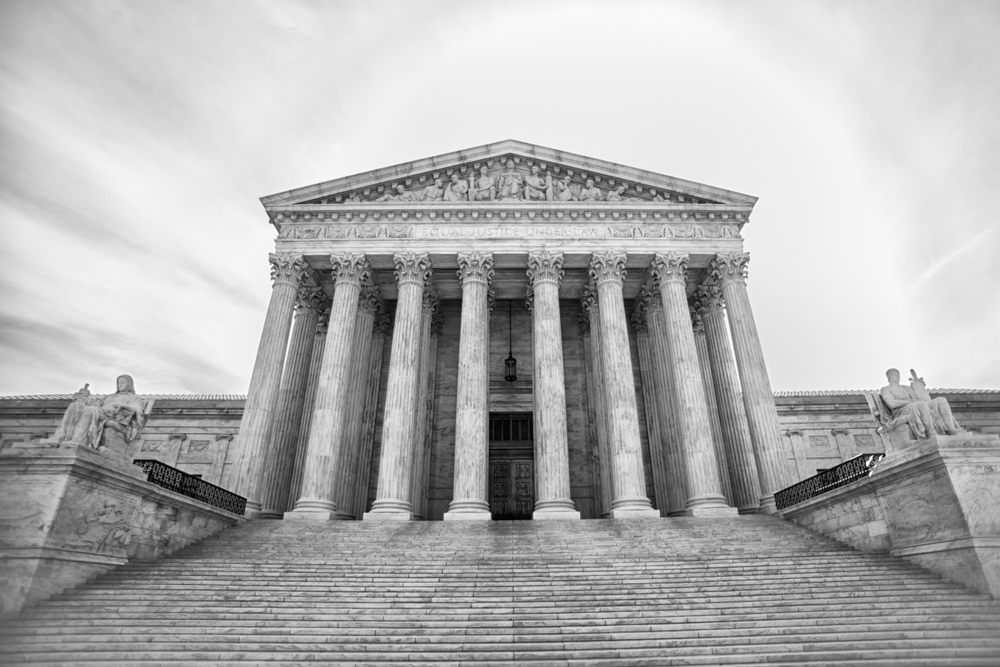
Seven Supreme Court justices just blocked Donald Trump's mail ballot rules for the 2026 midterms.
Buried inside that same ruling, Brett Kavanaugh wrote something Democrats are not going to like.
The Postal Service's ballot tracking rule did not die on September 15 – it just got a two year head start.
The Court Split Seven Two but Kavanaugh Split From the Majority's Reasoning
The Supreme Court's order came down unsigned, blocking the Postal Service's new mail ballot tracking requirements from taking effect before the 2026 midterms.
Justices Samuel Alito and Clarence Thomas dissented.
Every other justice on the bench – including Trump appointees Neil Gorsuch, Brett Kavanaugh, and Amy Coney Barrett – voted to freeze the rule for this election cycle.
That is the headline Votebeat and CNN wanted you to see.
It is not the whole story.
Kavanaugh wrote separately, and he did not sign onto the idea that the Postal Service lacks the authority to require ballot tracking in the first place.
He wrote that there is "at least a fair prospect" the rule "falls within" the Postal Service's statutory authority.
His objection was timing, not substance.
He said state and local election officials simply did not have enough runway to implement the rule before ballots start going out for this year's midterms.
That is not a constitutional objection.
That is a scheduling problem – and scheduling problems have expiration dates.
Alito and Thomas Said the Postal Service Never Needed Permission
Alito's dissent went further than Kavanaugh's concurrence.
He argued the government had already made the showing needed to justify letting the rule take effect, and he questioned whether the challengers even had standing to bring the case.
Thomas joined him.
Between the two dissenters and Kavanaugh's separate opinion, three justices on this Court have now put in writing that the legal foundation under Trump's order is not the problem.
The problem, according to seven justices, is the calendar.
Democrat-run states fought this rule in court for months, arguing it was illegal on its face.
They just watched three justices tell them, in writing, that argument does not hold up.
The Supreme Court Has Been Here Before
This is not the first time the Court has blocked an election rule on timing grounds while leaving the underlying authority intact.
The Court's 2006 ruling in Purcell v. Gonzalez set the template – justices halted an Arizona voter ID requirement days before an election specifically because of the confusion a last minute change could cause, not because the requirement itself was unconstitutional.
That case became the foundation for two decades of "too close to the election" rulings that federal courts still cite today.
Trump's team is now working from the same playbook Purcell created – lose the timing fight now, come back when there is no clock ticking, and win the merits fight later.
Kavanaugh basically told them how to do it.
What Comes Next for the 2028 Rule
The Postal Service's final rule is not dead. It is shelved.
Mail ballots for the 2026 midterms will move under the old rules, with no new tracking requirements, because the changes came too close to Election Day for state officials to adjust in time.
That deadline pressure disappears the moment this election ends.
Election law analysts covering the ruling for outlets across the spectrum have already flagged the same thing Kavanaugh's opinion signals – without an imminent election forcing the Court's hand, Democrat-run states will have a far harder time convincing a majority that the Postal Service overstepped its authority.
That fight would land with two full years of runway before the 2028 presidential race, which is exactly what killed the government's case this time.
Trump called it "another bad decision" that "makes cheating by the Radical Left" easier. Behind the legal reasoning, his administration got something better than a win this time around – a roadmap, written by a justice he appointed, for how to make sure the next ruling comes out differently.
The lower courts that blocked this rule all year now have to explain why a scheduling problem should stop the Postal Service from ever tracking mail ballots again.
Based on what Kavanaugh and Alito already put in writing, that is not going to be an easy argument to make twice.
Sources:
- Justice Brett Kavanaugh, concurrence, United States Postal Service v. California, Supreme Court of the United States, September 15, 2026.
- "Trump calls Supreme Court mail ballot ruling 'big loss for Republicans,'" CNBC, September 15, 2026.
- "Kavanaugh Throws Trump 'a Lifeline' on Mail Ballot Rules Despite Supreme Court Loss Before Midterms," Fox News, September 16, 2026.
- "Supreme Court Blocks Trump's Proposed Mail Ballot Restrictions for 2026 Election," Votebeat, September 15, 2026.
- "Supreme Court Won't Restore Trump's Mail-In Voting Plan for Midterms," The Hill, September 14, 2026.
- Purcell v. Gonzalez, 549 U.S. 1 (2006), Supreme Court of the United States.
- Kyle Becker, "Buried in Devastating Supreme Court Decision Is Hope Yet for Trump's Election Integrity Order," RedState, September 17, 2026.