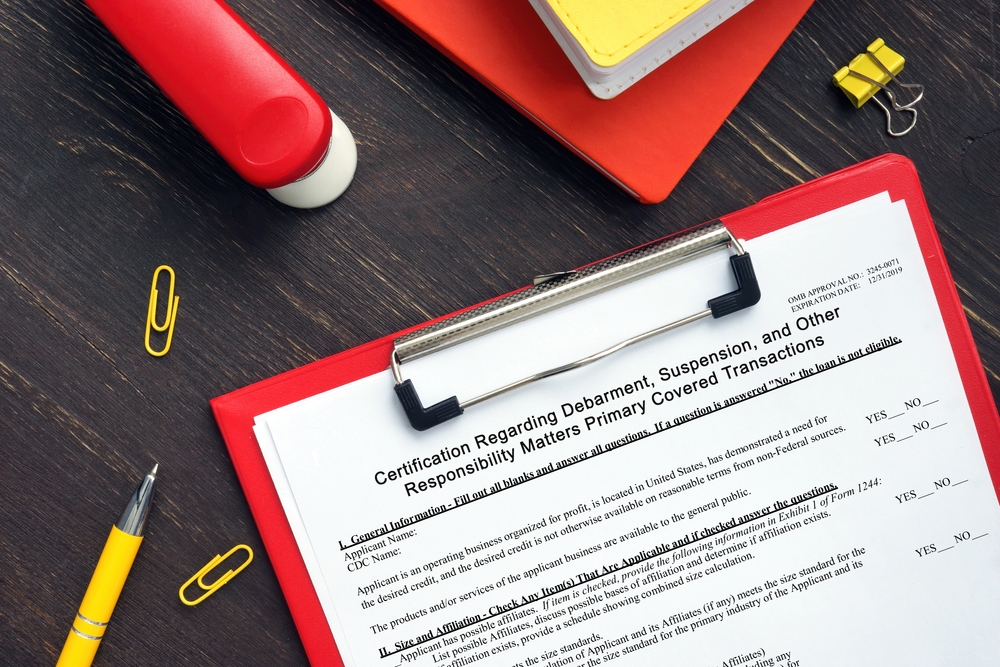
California disbarred John Eastman for representing Donald Trump after the 2020 election.
Eastman filed a petition asking the Supreme Court to overturn that disbarment on September 11, 2026.
The nine justices, who are all lawyers themselves, now decide whether his career survives.
A Constitutional Law Professor Loses His License Over Legal Advice
John Eastman taught constitutional law for decades and served as dean of Chapman University's law school before he ever met Donald Trump.
Then he advised Trump's legal team on the Electoral Count Act after the 2020 election, and California's State Bar came for his license.
State Bar Court Judge Yvette Roland found Eastman culpable on ten separate counts.
Those counts covered private memos analyzing Mike Pence's role under the Twelfth Amendment, court filings in Texas v. Pennsylvania and Trump v. Kemp, a podcast appearance, remarks at a rally on January 6, and even a published article.
California's Supreme Court denied his petition for review without writing a single word of explanation on April 15, 2026.
Justice Elena Kagan gave Eastman until September 12 to file his own petition with the nation's highest court, and his legal team – led by Jay Sekulow of the American Center for Law and Justice and Alex Haberbush of Constitutional Counsel Group – beat that deadline by a day.
The Petition Accuses California of Rigging the Rules Against Him
Eastman's 53-page filing does not ask the justices to relitigate the 2020 election.
It asks them to decide whether a state bar can strip a lawyer's license for offering a losing constitutional argument.
The petition leans hard on Chiles v. Salazar, the Supreme Court's 2025 ruling that states cannot dodge strict First Amendment scrutiny by dressing up speech restrictions as professional-conduct rules.
California's bar court applied something closer to an ordinary negligence standard to Eastman's advocacy, then treated his disputed reading of the Electoral Count Act as a knowing factual lie rather than a legal opinion lawyers argue over every day.
The brief also invokes In re Loney, an 1890 Supreme Court case holding that federal courts control the consequences of conduct inside federal proceedings, to argue California had no business independently punishing Eastman over filings no federal judge ever sanctioned.
Sekulow and Haberbush wrote plainly that "Eastman's constitutional arguments does not transform legal advice into moral turpitude just because it departs from a preferred set of experts."
Rachel Alexander at Townhall points out something the California bar would rather nobody notice: courts in Texas, Utah, and Georgia looked at nearly identical 2020 election advocacy from other attorneys and declined to discipline them at all.
Same election, same legal theories, wildly different outcomes depending on which state got to sit in judgment.
No Docket Number Yet, No Guarantee the Court Even Looks
Here is the part California's cheerleaders in the legal press keep skating past: nothing has been decided.
The petition arrived at the Supreme Court on September 11 with a blank spot where a docket number belongs, meaning the justices have not yet acted on whether to grant review at all.
Getting four justices to agree to hear a case is always a long shot, and the Court could simply let California's disbarment stand without ever explaining why.
That is the honest state of play right now, a filed petition and nothing more, and it is worth sitting with instead of pretending a ruling is around the corner.
The uncertainty itself is exactly the point conservative lawyers are making.
Every Justice on That Bench Has a Law License Too
Rudy Giuliani got disbarred in both New York and Washington, D.C. for the same category of 2020 election work, and neither state bothered pretending it was applying neutral professional standards.
Eastman's case is the first to reach the Supreme Court with a real shot at forcing the justices to answer a question they have avoided for years: can a state bar punish a lawyer for losing an argument, or only for lying?
That question matters far beyond Eastman, because if California's theory survives, every state bar in the country just got a blueprint for disbarring conservative attorneys the moment they take a case Democrats don't like.
Watch how fast Blue-state bars start applying that same "negligence" standard to lawyers challenging vaccine mandates, election integrity laws, or gender-transition policies for minors the second this playbook gets a green light.
Chiles v. Salazar already told states they can't hide censorship inside licensing rules, and Eastman's lawyers are betting the Court meant it.
If the justices grant certiorari, expect California's bar to suddenly discover a newfound respect for "individualized findings" and "statement-by-statement analysis" it never bothered applying the first time around.
Sources:
- Rachel Alexander, "Barfare: Will the Supreme Court Reverse the Disbarment of John Eastman?," Townhall, September 14, 2026.
- Jay Sekulow and Jordan Sekulow, "ACLJ Files Supreme Court Petition Defending Professor and Former Trump Lawyer John Eastman From Politicized Disbarment," American Center for Law and Justice, September 11, 2026.
- "Eastman Asks SCOTUS To Stop California's Politicized Barfare," The Federalist, September 16, 2026.
- "John Eastman's Supreme Court Petition: A Reader's Guide," LyceumNow, September 2026.
- "Rudy Giuliani disbarred in D.C., months after disbarment in New York," CBS News, September 26, 2024.
- Justia U.S. Supreme Court Center, In re Loney, 134 U.S. 372 (1890).
Related posts:

 Agent’s Two Word Answer to Investigators Just Blew Up Jack Smith’s Cover Story
 Grassley Says Jack Smith’s Team Even Subpoenaed a Retiree’s Ten Dollar Campaign Check