John Ream can legally brew beer in his Ohio kitchen but risks five years in federal prison for distilling one ounce of whiskey there.
Two federal appeals courts already split on whether that same 1868 law can survive.
Now the Supreme Court must decide if a Reconstruction era statute still belongs in your kitchen.
A Felony Older Than the Automobile Still Bans a Shot of Whiskey at Home
John Ream is a former aerospace engineer from Licking County, Ohio, who fell in love with homebrewing.
"Brewing was the perfect combination of art and science, and my engineering brain just totally latched onto it," Ream has said.
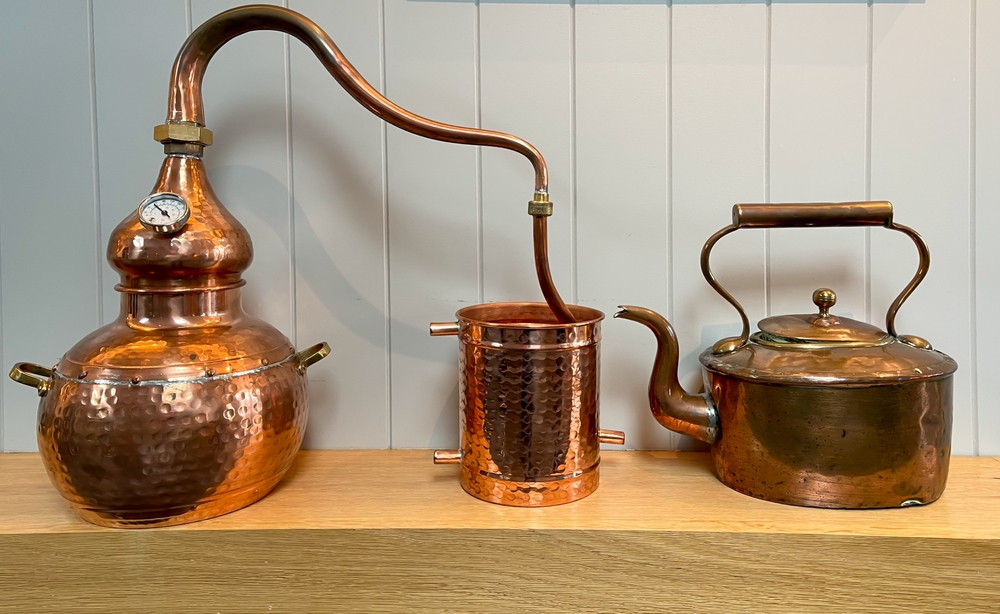
He wanted to take the next logical step and distill small batches of spirits for himself and his wife.
Federal law calls that a felony under 26 U.S.C. 5601, punishable by up to five years in prison, a $10,000 fine, and seizure of his home.
The ban traces back to 1868, when Congress passed a sprawling 109-section tax statute aimed at stopping what courts have since called "stupendous frauds" in the whiskey trade.
Congress legalized home beer brewing in 1978, and craft brewing exploded into a multi-billion dollar American industry almost overnight.
Home winemaking has been legal even longer than that.
Distilling a single ounce of spirits in that same kitchen, next to the legal beer and the legal wine, remains a federal crime today.
Ream sued the Treasury Department in January 2024, represented by Robert Alt and Andrew Grossman of the Buckeye Institute alongside BakerHostetler attorney Kristin Shapiro.
Their argument is simple: Congress never had constitutional authority to criminalize a purely personal, noncommercial activity happening inside someone's own home.
Two Federal Courts Read the Same 1868 Law and Landed in Opposite Places
The Fifth Circuit ruled first, striking down the home distilling ban in McNutt v. United States Department of Justice as an illegitimate tax measure.
Judges there found the prohibition does not raise federal revenue at all, because a banned still produces zero taxed gallons instead of one.
Eleven days later, the Sixth Circuit ruled the exact opposite way in Ream's case, upholding the ban under Congress's taxing power combined with the Necessary and Proper Clause.
Robert Alt framed the constitutional stakes bluntly: "To what extent can Congress regulate local non-commercial otherwise lawful activity that you engage in, in your very home?"
A federal district court had already dismissed Ream's lawsuit in March 2025, before the Sixth Circuit affirmed that dismissal in April 2026.
Two circuits, reading the same 158-year-old statute, reached opposite conclusions within eleven days of each other.
That kind of split is exactly what gets a case onto the Supreme Court's desk.
Ream's attorneys filed a formal cert petition on July 20, 2026, and the Cato Institute has since filed a brief backing him, urging the justices to take the case.
The justices have not yet said whether they will hear it.
Why a Kitchen Still Case Could Rewrite How Far Washington Can Reach Into Your House
The wildest part of this fight is that the government's argument cuts against itself: prosecutors are defending a law by claiming it protects tax revenue that the law itself guarantees never gets collected.
A still sitting unused in someone's basement out of fear of a felony charge generates nothing for the Treasury, while the legal homebrew kit down the street generates jobs, taxes, and an entire industry.
Look at what happened after 1978 – legalizing home beer brewing didn't drain the Treasury, it built the modern craft brewing industry from nothing.
If the Supreme Court takes Ream's case and agrees with the Fifth Circuit, Americans who already legally ferment beer and wine in their kitchens could finally distill whiskey, brandy, or moonshine there too, without risking five years in federal prison and the loss of their home over it.
Sources:
- Teresa Mull, "Man challenging 150-year-old ban on making liquor at home hopes Supreme Court takes his case," Fox News, September 22, 2026.
- Jacob Sullum, "A Circuit Split Gives SCOTUS an Opportunity To Overturn a Federal Law That Makes Home Distilling a Felony," Reason, May 13, 2026.
- Thomas A. Berry and Matthew Cavedon, "Ream v. U.S. Department of the Treasury," Cato Institute, August 20, 2026.
- The Buckeye Institute, "Ream v. U.S. Department of Treasury," Buckeye Institute, 2026.
Related posts:

 Clarence Thomas Just Laid Waste to Leftists’ Intellectual Segregation and He Only Needed a Savannah Library
 Sean Duffy Just Revealed America’s Answer to the Nuclear Cargo Ship China Already Built
 Scott Bessent Silenced Maxine Waters With Four Words She Never Saw Coming