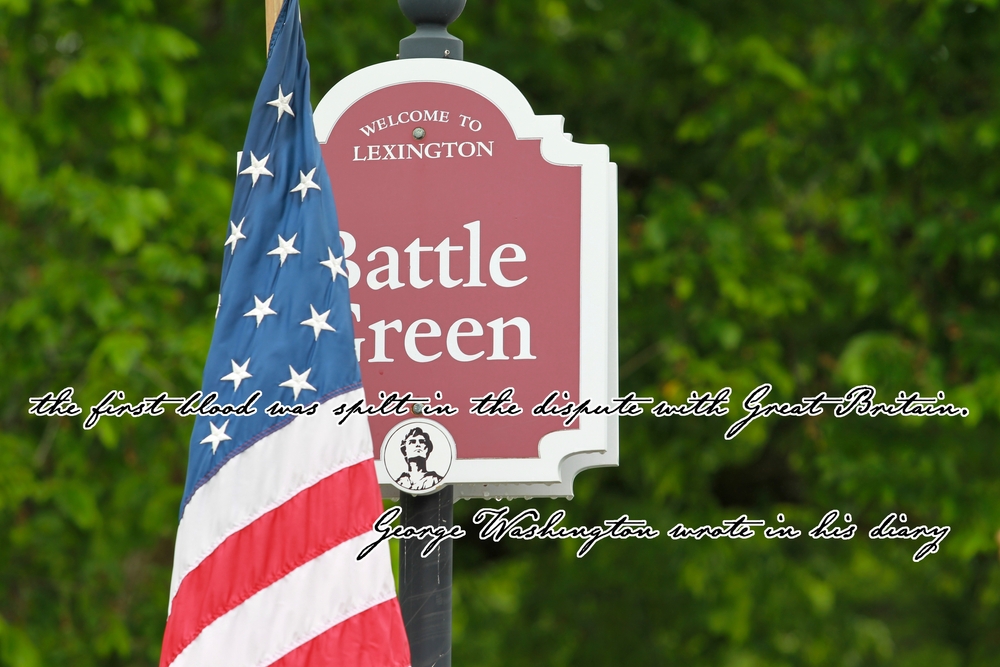
Eight Americans died on Lexington Green within minutes of the British opening fire.
Their captain was dying of tuberculosis with five months left to live when he stood his men on that green.
The words he gave them that morning are still quoted two hundred and fifty years later.
The Shot Nobody Claimed
In the fall of 1774, King George III had already made his decision.
He told his prime minister that blows must decide whether the colonists would remain subjects or become independent.
The Crown banned the import of gunpowder into the colonies.
British troops shut down the port of Boston, throwing thousands out of work.
General Thomas Gage received his orders: disarm the Americans before they could organize a real fight.
On the night of April 18, 1775, more than 700 British regulars set out for Concord to do exactly that.
Paul Revere and other riders had already spread the alarm across the Massachusetts countryside.
By dawn, Captain John Parker had more than 70 militiamen standing on Lexington Common.
This would be his last fight, and he knew it.
He gave them the order that would launch eight years of war: stand your ground, don't fire unless fired upon, but if they want a war, let it begin here.
Nobody knows for certain which side fired first.
British regulars stormed forward and opened fire from barely 30 to 60 yards out.
Jonas Parker, the captain's own cousin, went down bleeding and refused to leave the field.
He was struggling to reload when a British soldier closed in and killed him with a bayonet.
Fathers and sons from Lexington lay dead side by side by the time the firing stopped.
The Battle That Turned a Bonfire Into a War
The British pushed on to Concord to finish the job: find and destroy the colonists' hidden cannon and gunpowder.
They found the guns, but most of the powder had already been moved out of town.
Smith's troops dragged the gun carriages into a bonfire, and the flames jumped to the buildings next door.
For one strange moment, American colonists and British soldiers formed a bucket brigade together to fight the fire.
Colonists watching from a hill above town saw the smoke and assumed their homes were being torched.
Militia commander James Barrett gave the order to march on the British.
At the North Bridge, a British soldier broke ranks and fired on his own, and this time nobody disputed who started it.
The skirmish became known as the shot heard round the world, a phrase coined decades later by the poet Ralph Waldo Emerson.
British troops retreated toward Boston and walked straight into an ambush at Meriam's Corner, then another, then another.
Lord Percy's relief column of 1,300 men arrived just in time to save what was left of Smith's exhausted troops.
Percy himself worried they might not make it, noting the retreat to Boston was fifteen miles with barely thirty six rounds of ammunition left per man.
Captain Samuel Whittemore, seventy eight years old, hid behind a stone wall, killed one soldier, then shot a second, and kept fighting even after being shot in the face and bayoneted again and again.
He survived and lived to be ninety six.
Why Levi Preston Really Fought
Decades after the war, a young historian sat down with an old Massachusetts veteran named Captain Levi Preston and asked him why he had marched to the Concord Fight that day.
The historian suggested the Stamp Act.
Preston said he had never even seen one of the stamps.
The historian suggested the Tea Tax.
Preston said he never drank the stuff. The boys threw it all overboard.
The historian kept reaching for official explanations, and Preston kept waving them off.
Then he gave the real one.
We always had governed ourselves, he said, and we always meant to. They didn't mean we should.
That is not a lawyer's answer.
That is not a historian's answer.
That is the answer of a man who watched his neighbors die for the plain right to run their own lives without a king's permission.
The Anniversary Nobody Should Sleep Through
America turns 250 years old on July 4, and most of the country will remember the Declaration.
Fewer will remember the shooting started more than a year earlier, on a village green, over gunpowder the British had no right to seize.
The men on Lexington Common were not radicals looking for a fight.
They were farmers, tradesmen and mariners who had spent months hoping for peace while the Crown starved their trade and came for their weapons anyway.
They stood their ground because self government was not a debate topic to them. It was something you either have or you don't.
Levi Preston's answer still holds up two hundred and fifty years later.
That is the anniversary worth remembering this Fourth of July, not just the parade.
Sources:
- Patrick K. O'Donnell, "The Shot Heard Round the World: How Subjects Became Citizens at Lexington and Concord," Breitbart, July 1, 2026.
- Fox News Staff, "Celebrate Lexington and Concord heroes, Black and White, on battle's 250th anniversary," Fox News, April 19, 2025.
- The White House, "250th Anniversary of the Battles of Lexington and Concord," Presidential Proclamation, April 18, 2025.
- Massachusetts Society Sons of the American Revolution, "250th Celebration of the Battle of Lexington and Concord," MASSAR.