Three county commissioners just approved a data center twice the size of Manhattan over the objections of a thousand residents.
Now the people who live next to it are asking a question nobody in government wants to answer.
Because the answer has nothing to do with storing your family photos.
How Utah's Stratos Project Got Approved in Three Weeks Through a Military Loophole
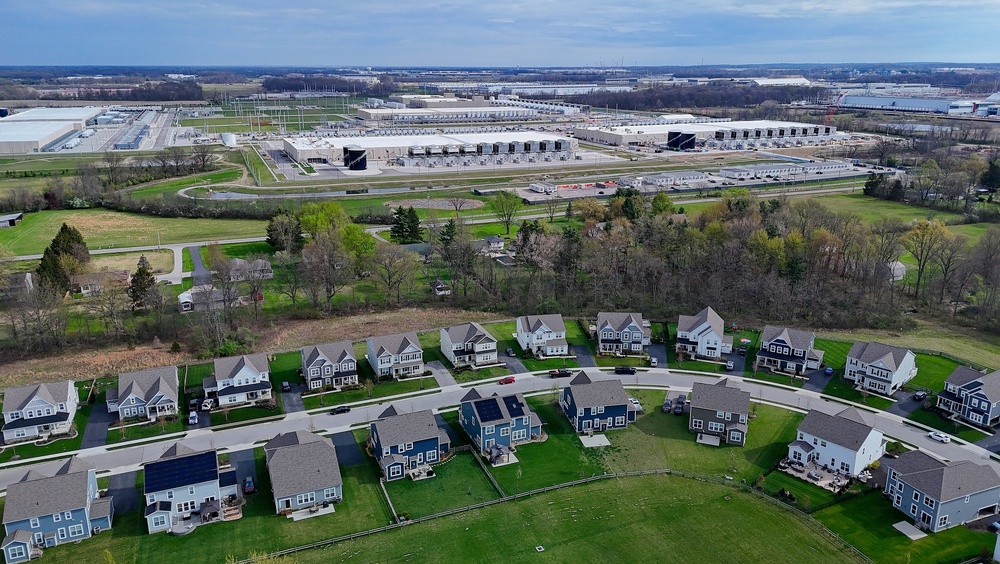
The Stratos Project sits on 40,000 acres of rural Box Elder County – a stretch of northern Utah desert roughly 200 times the size of the NSA's existing facility in the same state.
It will consume 9 gigawatts of power at full buildout.
That's more than double the entire current electricity consumption of Utah.
Backed by Shark Tank investor Kevin O'Leary, the project was approved in weeks – not the typical five-year review process.
The three Box Elder County commissioners used a zoning mechanism called the Military Installation Development Authority to fast-track the vote.
On May 4, over a thousand residents packed the Box Elder County Commission meeting and chanted "Shame! Shame! Shame!" as commissioners collected their things and fled toward the exit.
All three voted yes anyway.
O'Leary appeared by video at the MIDA board meeting to make the case himself.
His argument: "We're in a race with them" – meaning China.
To seal the deal, MIDA cut the project's energy use tax from 6% to 0.5% and agreed to rebate 80% of property tax revenue to the developer.
The residents of Box Elder County got something different.
They got a town hall.
An official stood at a podium, spoke into a microphone, and told the people filming the roaring facility outside their windows at midnight one thing: the water is safe.
That's what you get when they build something like this next to your house.
https://x.com/Ryanmatta/status/2053524460183945606“>https://x.com/Ryanmatta/status/2053524460183945606
Not a rebate.
A reassurance.
What These Facilities Actually Do to a Community
Here's the first question every homeowner near one of these sites starts asking.
What happens to my property value?
The answer isn't complicated: the same thing that happens to every neighborhood that gets an industrial facility bolted to its edge.
The constant mechanical noise from cooling systems runs 24 hours a day, seven days a week.
https://x.com/Ryanmatta/status/2053523759831679442“>https://x.com/Ryanmatta/status/2053523759831679442
The Environmental and Energy Study Institute documented noise levels reaching 96 decibels around these sites around the clock – as loud as a motorcycle at close range, every hour of every day, with no off switch.
Residents near existing data centers across the country report a low-frequency hum that noise-cancelling headphones can't stop and earplugs can't block.
Chandler, Arizona homeowners lived with it for nearly a decade before the city changed its zoning code in 2022.
Then there's the water.
Utah Clean Energy estimates the Stratos Project could consume up to 2 billion gallons of water annually just to run its power generation systems – enough to fill roughly 3,000 Olympic swimming pools every year.
Nearly 4,000 Box Elder County residents filed formal protests with the Utah Division of Water Rights before the developer quietly withdrew its water rights application just two days after the protest period closed – then announced it would refile later, voiding every protest already submitted and forcing residents to start over.
The Great Salt Lake sits at the edge of this project's footprint.
It's already shrinking.
https://x.com/Ryanmatta/status/2053523763346424301“>https://x.com/Ryanmatta/status/2053523763346424301
Ranching families who have worked that land for generations are being pushed out to make room for server farms.
https://x.com/Ryanmatta/status/2053523768723558831“>https://x.com/Ryanmatta/status/2053523768723558831
In 2025 alone, local opposition to AI data centers nationwide forced the delay or cancellation of projects totaling $156 billion – because the Americans who live next to these things want no part of them, and their property values tell you exactly why.
The Pentagon Budget That Explains Why America Needs a 9-Gigawatt AI Surveillance State
Here's what the tech industry and their government partners don't want you calculating.
ChatGPT doesn't need 9 gigawatts.
A few major data centers already handle the world's consumer AI demand.
The scale being built in Utah – 200 times the size of the NSA's existing facility down the road – is not consumer infrastructure.
https://x.com/Ryanmatta/status/2053523765171048545“>https://x.com/Ryanmatta/status/2053523765171048545
The Pentagon requested $13.4 billion for autonomous military AI systems for 2026 alone, including up to $9 billion specifically for data centers and computing built for national security applications.
DARPA is actively recruiting for a summer 2026 workshop on robotics designed for "extreme, unpredictable, and adversarial environments with limited human intervention."
Boston Dynamics' robot dogs are already deployed across more than 60 bomb squads and SWAT teams in the U.S. and Canada.
In November 2024, the Secret Service used one to patrol Mar-a-Lago ahead of the President-elect's arrival.
No announcement.
No press release.
The image surfaced, made a brief pass through the news cycle, and vanished.
That's the pattern – the infrastructure goes up first, the explanation comes later, and sometimes never.
The Stratos Project isn't being built so Kevin O'Leary can win a race with China over server racks.
https://x.com/Ryanmatta/status/2053580174831026294“>https://x.com/Ryanmatta/status/2053580174831026294
Every autonomous enforcement system, every drone, every robot dog deployed in American cities needs to communicate, process data, and receive instructions from somewhere.
That somewhere is 40,000 acres in the Utah desert, approved in weeks through a military zoning authority, while a thousand residents chanted "Shame" and were told the water is safe.
The question worth asking isn't whether Stratos was built for ChatGPT.
The question is why they needed a military authority to approve a commercial data center – and why the approval had to happen before anyone could mount a real fight to stop it.
Sources:
- "Utah just approved a data center twice the size of Manhattan that will consume more electricity than the entire state," TechRadar, May 2026.
- "Kevin O'Leary's 9 Gigawatt Utah Data Center Campus Approved," Tom's Hardware, April/May 2026.
- "Separating Fact from Fiction on the Massive Utah Data Center Project," Deseret News, May 12, 2026.
- "A Massive AI Data Center Transforms Rural Utah into a National Flashpoint," Peoples Dispatch, May 9, 2026.
- "The Military's Use of AI, Explained," Brennan Center for Justice, March 12, 2026.
- "AI Data Centers Face Increasing Complaints About Infrasound," Tom's Hardware, May 10, 2026.
- "Communities Are Raising Noise Pollution Concerns About Data Centers," EESI, March 2026.
- "The Robot Dog Is on Patrol. And It's Just Getting Started," Futurist Speaker, April 1, 2026.
- "Estimated Emissions and Water Consumption from the Proposed Stratos Data Center," Utah Clean Energy, May 2026.
- "Utah Data Center Water Fight Intensifies," Western Water, May 8, 2026.
Related posts:

 Peter Doocy Asked Trump About His Face on the 250 Dollar Bill and Trump Gave an Answer Worth Every Penny
 Pelosi Explodes at “Pillow Guy” Reporter Asking About January 6 and Demands She Get Away
 Scott Bessent Silenced Ron Wyden With Four Words About His Son and Jeffrey Epstein