Abigail Spanberger once called gerrymandering detrimental to democracy but just spent $64 million to ram through a map gerrymandered 10 to 1.
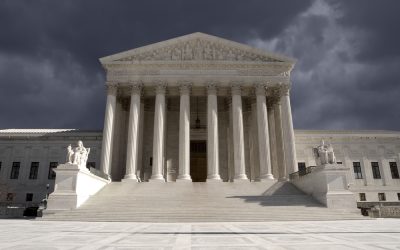
The Virginia Supreme Court is poised to take it away next week.
But there’s another constitutional argument hiding in this map that could blow the whole thing up in the US Supreme Court.
Virginia Democrats Rigged the Process Before They Rigged the Map
Tuesday's vote was not close enough for comfort.
Spanberger's side won 51 to 49.
For that margin, the pro-gerrymander campaign outspent opponents three to one – $64 million against roughly $22 million.
George Soros' Open Society network cut a $5 million check into the pot.
Barack Obama cut ads.
Hakeem Jeffries held a rally.
And the ballot question itself was designed to deceive.
Voters were asked if they wanted to "restore fairness" to Virginia elections.
A Tazewell County judge already ruled that phrase was "likely misleading" and probably unconstitutional.
He was overruled on procedural grounds – not because he was wrong on the merits.
The underlying constitutional problems never went away.
The Virginia Redistricting Lawsuits Republicans Are Fighting Right Now
Three separate lawsuits are pending before the Virginia Supreme Court, with oral arguments already scheduled for April 27.
The first was filed by House Minority Leader Terry Kilgore and state Senators Ryan McDougle and Bill Stanley.
Their argument: the Democrat-controlled legislature used an improperly extended special session – kept open for nearly two years – to pass the redistricting amendment.
The Virginia Constitution does not allow that.
A lower court agreed with them.
The Virginia Supreme Court overruled the injunction not because Republicans were wrong, but because it decided voters should go first.
Now the voters have spoken.
The court has to answer the question it dodged.
McDougle and Kilgore put the principle plainly: you cannot change the Constitution by ignoring the Constitution.
The second lawsuit came from the RNC.
Chairman Joe Gruters called it a scheme to silence Virginia voters and lock in permanent political control for Democrats.
A judge found Republicans had an "extraordinarily high likelihood of success on the merits" on the ballot language claim alone.
The third lawsuit was filed by Republican Congressmen Ben Cline and Morgan Griffith – two of the four sitting GOP members whose seats the new map was specifically drawn to eliminate.
All three cases land before the same court.
What Spanberger's 10 to 1 Congressional Map Actually Does to Virginia
Before Tuesday, Virginia sent six Democrats and five Republicans to Congress.
Under Spanberger's map, that becomes ten Democrats and one Republican.
Four sitting Republican congressmen – Rob Wittman, Jen Kiggans, John McGuire, and Ben Cline – have their districts redrawn out of existence.
The new 7th District has been nicknamed the "lobster claw."
It anchors in deep-blue Arlington, then stretches one arm into the Shenandoah Valley and another into western Greater Richmond.
Republicans in the Shenandoah Valley – who have never shared a congressional district with Arlington – are now lumped in with the most liberal jurisdiction in the Commonwealth.
Analysts call it one of the most extreme partisan gerrymanders in the country this cycle.
47 Can Undo 1847 – The Constitutional Argument Democrats Cannot Simply Dismiss
The existing lawsuits are the main event.
But a second legal front has gotten almost no attention – one that strikes at a more fundamental level than special session procedure or ballot language.
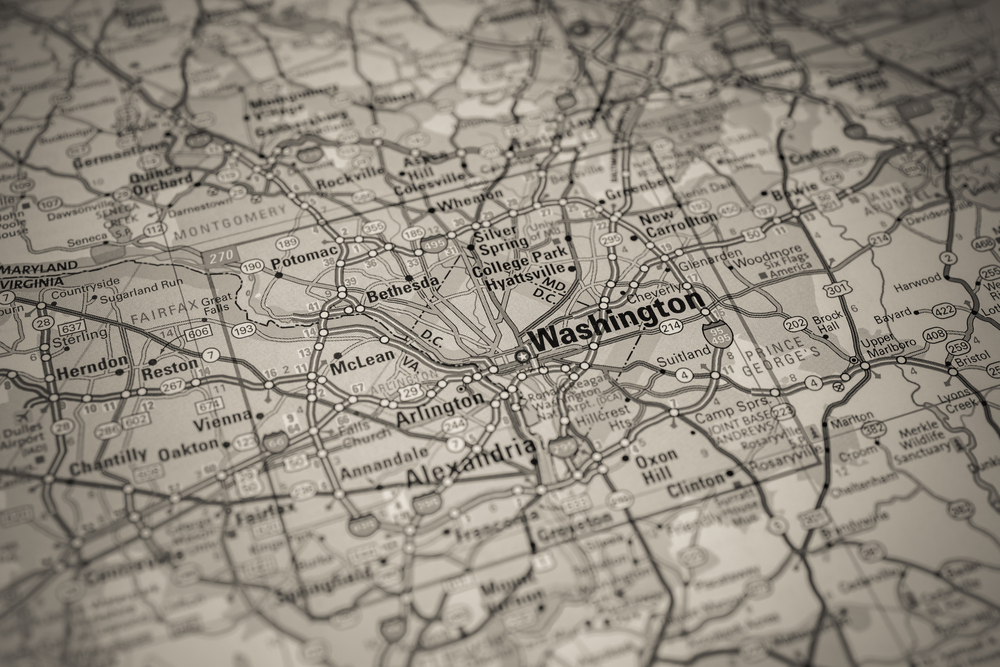
Alexandria is in this map.
And a constitutional argument the Supreme Court has never fully resolved says Alexandria may not legally be Virginia.
Virginia ceded Alexandria to the federal government in 1791 to form the original District of Columbia.
In 1847, Congress voted to return it – a transaction called retrocession.
Article I, Section 8 gives Congress explicit authority to govern a federal district as the seat of government.
It contains no clause authorizing Congress to shrink that district or return land to a state once formally ceded.
In Phillips v. Payne in 1875, the Supreme Court had the question directly in front of it and declined to rule on the merits.
The justices deferred to 28 years of settled practice and moved on.
"Settled in practice" is not the same as "valid under the Constitution."
The framers’ intent in Article I, Section 8 was structural, not temporary.
They wanted a capital independent of any state—free from local political pressure.
Retrocession arguably broke that design.
It re-attached part of the federal district to a state, reintroducing the very influence the clause was meant to avoid.
Alexandria has a population of roughly 160,000 people. Arlington County is around 235,000
If Alexandria and Arlington are not constitutionally Virginia, the population count underlying this map is wrong, the district lines are misdrawn, and the representation being claimed is built on a foundation the Constitution may never have authorized.
All it would take to trigger the U.S. Supreme Court to settle this is for Trump to issue an executive order – 47 could undo 1847.
Spanberger and Democrats Misfired in Instantly Celebrating their Gerrymander
Spanberger went on social media Tuesday night to declare victory, framing the gerrymander as a defense of democracy against Donald Trump.
She did not mention that two separate judges already called her process illegal.
She did not mention that the ballot question her campaign wrote was found likely unconstitutional.
She did not mention that the Virginia Supreme Court explicitly reserved the right to nullify the entire result after the election.
Former Governor Glenn Youngkin called it an "egregious power grab" and urged the court to act.
Virginia GOP Chairman Jeff Ryer said the referendum fight is now behind them and the battle moves to the courts – where the question is whether the Virginia Supreme Court will hold that the General Assembly must follow the same Constitution it just ignored.
If the answer is yes, Spanberger's $64 million gerrymander gets thrown out before a single November ballot is cast.
Sources:
- OPB/AP, "Virginia Voters Deciding on Redistricting Plan That Could Boost Democrats' Seats in Congress," OPB, April 21, 2026.
- Fox News Digital, "Virginia Dems Accused of Illegally Steamrolling State Law," Fox News, April 17, 2026.
- Virginia Public Access Project, "2026 Congressional Redistricting," VPAP, April 2026.
- Washington Examiner, "Virginia GOP Chairman Says Democrats Used Dishonest Language to Pass New Map," Washington Examiner, April 22, 2026.
- 13NewsNow, "The Redistricting Referendum in Virginia Passed. What Happens Next?" 13NewsNow, April 22, 2026.
- Daily Caller News Foundation, "Soros-Linked Dark Money Puts Lopsided Democrat Gerrymander of Virginia Across Finish Line," The Daily Caller, April 21, 2026.
- Phillips v. Payne, 92 U.S. 130 (1875).
- U.S. Constitution, Article I, Section 8, Clause 17.