Colorado told fifteen hundred Catholic kids their preschool money was no good unless the church changed what it believes.
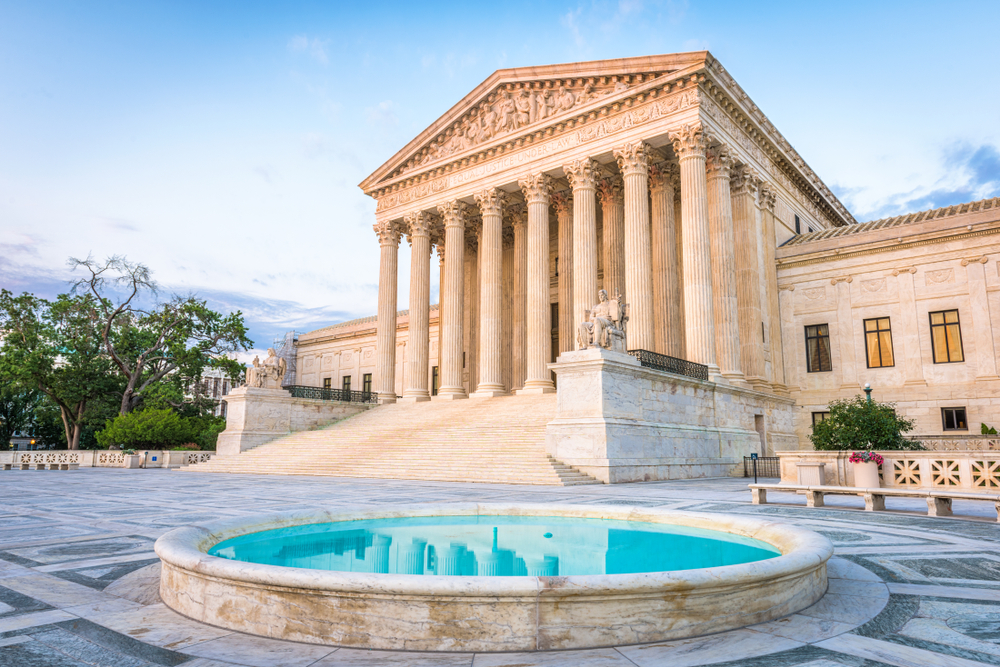
The Supreme Court just agreed to referee that fight, with Trump's own solicitor general stepping in.
The justices set November arguments in a docket that could upend how blue states punish religious schools.
St. Mary Catholic Parish v. Roy Puts Colorado's Preschool Discrimination on Trial
Dan and Lisa Sheley have seven kids, five of them already enrolled at St. Mary Catholic School in Colorado.
Their youngest is set to start preschool there in 2028.
Colorado launched a so-called "universal" preschool program in 2023, dangling roughly $6,300 per child for 15 hours of weekly preschool, advertised as available at public, private, or faith-based schools.
Then Colorado's Department of Early Childhood turned around and blocked the Sheleys and more than 1,500 other children across 30-plus Catholic preschools from using that money.
The reason was simple: Colorado wanted the Archdiocese to let boys use girls' bathrooms and staff use opposite-sex pronouns for a transgender preschooler the state admitted didn't even exist.
Wellspring Catholic Academy and Guardian Angels Catholic School didn't just get locked out, they shut down entirely.
Becket, the religious liberty law firm representing the family, says the state built a "universal" program and then carved Catholics out of it.
The Trump administration's solicitor general filed a brief backing the Sheleys, telling the justices Colorado's exclusion cannot stand.
That is the United States government telling the Supreme Court a blue state discriminated against people for practicing their faith.
The justices did something interesting with the scope of this case.
Becket asked the Court to overturn Employment Division v. Smith, the 1990 precedent that lets states burden religious exercise as long as a law is "generally applicable."
The Court said no to touching Smith directly.
Instead the justices agreed to decide a narrower question: whether Colorado's Free Exercise Clause violated the Constitution by refusing to exempt religious preschools from its nondiscrimination rule.
Carson v. Makin, the 2022 ruling that forced Maine to let religious schools into its tuition program, already told states they can't run a public benefit and then slam the door on churches.
Colorado apparently did not get the memo, and now it's about to find out in front of a Court that ruled against nearly identical discrimination four years ago.
Farm Family Faces Half a Million Dollar Fine From Government Judges They Never Chose
The same week the justices take up the Sheley family's case, they're also hearing from a New Jersey produce farm that got hammered by its own government tribunal.
Sun Valley Orchards hired seasonal workers through the H-2A visa program.
The Labor Department's in-house court ordered the farm to pay more than $500,000 in penalties and back wages over alleged H-2A visa violations.
No jury, no independent judge – just federal bureaucrats acting as cop, prosecutor, and jury on their own case.
The Third Circuit already smacked that process down, ruling it violated separation of powers.
The appeals court leaned on Securities and Exchange Commission v. Jarkesy, the 2024 Supreme Court decision that gutted the SEC's ability to fine people through its own in-house judges instead of real courts.
Jarkesy told Washington bureaucracies they don't get to be judge and executioner when real money and due process rights are on the line.
Sun Valley Orchards is the next test of whether that ruling was a one-off or the start of tearing down the entire administrative state's power to punish Americans without a real trial.
Seven cases total made the November docket, but these two carry the real stakes.
Carson v. Makin Already Told Colorado How This Ends
Colorado bet it could out-lawyer a family of seven and call it public policy.
The farm case matters just as much, because it's not really about lettuce and housing.
It's about whether any federal agency gets to write the rules, enforce them, and hand down the punishment in front of judges it employs itself.
If the Court extends Jarkesy's logic to the Labor Department, fines against small businesses and farmers nationwide get thrown into chaos.
Two very different fights share the same theme: agencies deciding they don't answer to anyone, until the Supreme Court reminds them they do.
Come November, both bets get called.
Sources:
- "Supreme Court to visit migrant labor, religious discrimination," The Center Square, August 2026.
- "Supreme Court Sets November Arguments in Religious Liberty, Prison Medical Care, and Agency Power Cases," The Epoch Times, August 2026.
- "U.S. Solicitor General backs Catholic parents & preschools at Supreme Court," Becket, July 2026.
- "St. Mary Catholic Parish v. Roy," Becket Fund for Religious Liberty, Case Page.
- "Trump administration, faith groups oppose Colorado preschool law," Deseret News, July 6, 2026.
- "Supreme Court takes up St. Mary Catholic Parish v. Roy," Washington Examiner, 2026.
Related posts:
 New Airport Video Has Ketanji Brown Jackson Facing a Question Her Office Won’t Answer
 Treasury Just Told 18,000 Schools Their Race Based Cash Cow Is Over
 Eric Schmitt Objected to a Democrat TPS Bill and Called It Their Final Scam