Zohran Mamdani stood in front of Amazon workers and called their jobs exploitation.
New York City's comptroller data told a very different story about who actually runs on contractors.
City Hall's delivery numbers are about to make Mamdani's push against Amazon look absurd.
New York City Runs More Than Twice As Many Contractors As Amazon
Mamdani, a democratic socialist, wants the City Council to pass the Delivery Protection Act, a bill sponsored by Councilmember Tiffany Cabán.
The bill would force Amazon to stop outsourcing deliveries to independent contractors and hire roughly 7,000 workers directly.
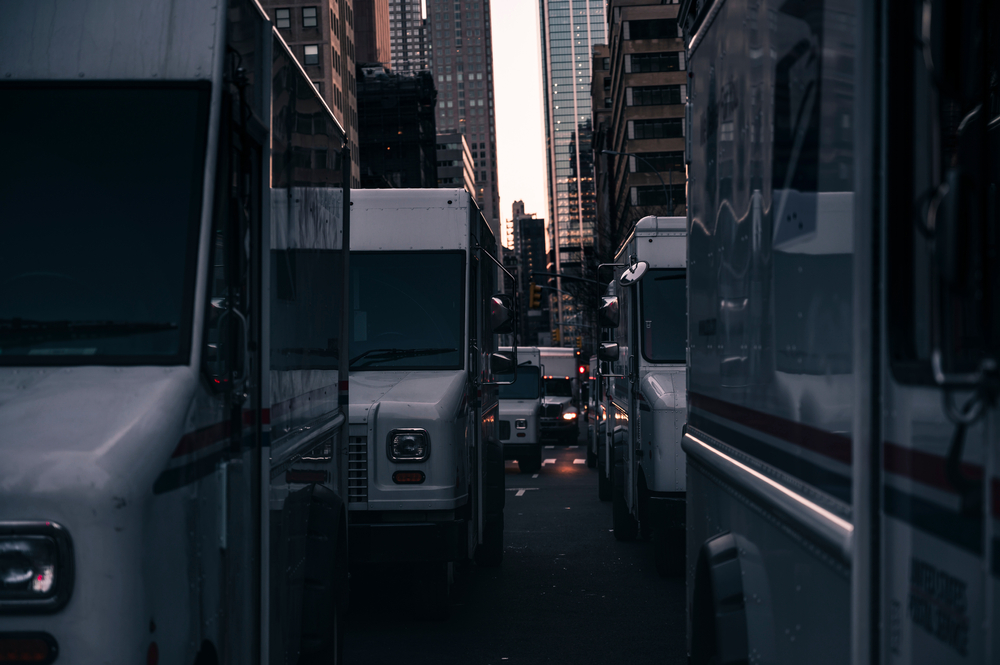
Amazon currently uses about 40 third-party delivery contractors across the five boroughs.
City agencies use far more than that.
Kris Basmagy, who owns DashWave Delivery, dug into city comptroller records to see exactly how much the city itself relies on the model it wants to outlaw.
He traced the pattern to three agencies – Homeless Services, Aging, and Transportation – which between them farm out roughly 85 separate contracts covering everything from meal drop-offs to construction hauling.
That's more than double what Amazon uses to get packages to your doorstep.
Zoom out further and the city partners with at least 11,617 unique subcontractors citywide.
Basmagy's math led him to a blunt verdict: the mayor's crusade is "hypocritical."
Why DashWave and COPR Industries Say the City Has It Backwards
Basmagy isn't some outside critic with no skin in the game.
His company employs 150 drivers, most of them working the Upper East Side.
DashWave Delivery would not survive if Amazon packed up and left New York City.
Juan Martinez runs COPR Industries out of Amazon's Red Hook distribution center in Brooklyn.
His company grew from 120 workers to 170 under the current setup.
Martinez pays his crew well above minimum wage, from $19.50 an hour for walkers up to $24.75 for van drivers, and throws in health coverage, a 401(k) match, and two weeks of paid vacation.
Martinez says City Hall is painting his drivers as "bad players" who can't do anything right.
Amazon has already warned it could abandon its fifteen-plus warehouses in the city rather than hire every delivery worker directly.
Delivery companies estimate 5,000 workers depend on the current model.
Another 2,000 Amazon warehouse employees could lose their jobs if the bill passes as written.
Teamsters rallied for the bill on October 22, and Mamdani personally urged the Council to vote yes.
Opponents rallied right back at City Hall on November 12.
A business-backed coalition calling itself New York Delivers is lining up a legal challenge, claiming the bill runs afoul of federal and state labor law.
The group has already brought on attorney Derek Sells of the Cochran Firm to lead that fight.
Council Speaker Julie Menin can call the vote whenever she wants, and she knows the politics are ugly.
Councilmember Phil Wong of Queens already pulled his support once he saw the job-loss numbers.
Menin is pushing amendments to try to save jobs while still claiming a win for workers.
Menin said she's determined to pass a bill that "protects these workers and keeps these jobs in our city."
One idea floating around the Council would put the trucks themselves on warehouse operators' books, forcing them to buy or lease the vehicles instead of leaving that to subcontractors.
Mamdani's office didn't respond to requests for comment.
Amazon, for its part, said only that it appreciates Menin's outreach to stakeholders and plans to stay engaged.
What Happens to the Workers If Amazon Walks Away
Economists who study this exact tradeoff aren't guessing about what comes next.
The Mercatus Center found that converting contractors to employees adds 29 to 39 cents on top of every dollar in wages.
When Massachusetts studied a similar mandate, researchers projected it could wipe out up to 87 percent of app-based delivery jobs in the state.
New York doesn't need to guess what happens when a mandate like this lands, because the data already exists in other states.
A DashWave or COPR driver reading this bill isn't picturing a union card; he's picturing a pink slip.
Fewer contractors doesn't mean more union jobs; it usually just means fewer jobs, period.
Amazon has already said the mandate could add hundreds of dollars a year to the average New York household's bill.
Mamdani built his campaign on affordability, and this bill is already testing that promise before it even passes.
Basmagy's comptroller numbers didn't just embarrass City Hall for one news cycle.
They handed Amazon and every small delivery company fighting this bill the only argument they needed: physician, heal thyself.
If the city can't run its meal-delivery and construction contracts without leaning on dozens of subcontractors, it has no business lecturing Amazon for doing the same thing.
Sources:
- New York Post, "NYC Uses Twice as Many Delivery Contractors as Amazon Does, Data Shows – Even as City Weighs Crackdown: 'Hypocritical,'" New York Post, November 16, 2026.
- Fox Business, "Amazon Warns Mamdani-Backed Delivery Mandate Could Cost NYC Households Hundreds Every Year," Fox Business, 2026.
- Daily Signal, "Mamdani Promised Affordability. His New Amazon Delivery Plan Could Make NYC More Expensive," Daily Signal, August 11, 2026.
- Manhattan Institute, "Mamdani Goes After Amazon and Shows Off His Stunning Hypocrisy," Manhattan Institute, August 17, 2026.
- Mercatus Center, "Consequences of Restricting Independent Work and the Gig Economy," Mercatus Center, 2026.
Related posts:

 Obama’s Cheesecake Joke Exposed What His Presidency Cost Everyone and Then His Follow Up Really Dropped Jaws
 Beltway RINOs Sabotaged the Texas Senate Race and Now Their Media Pals Are Trying to Gaslight You Over It
 Republicans Just Found a Reconciliation Loophole That Locks Democrats Out for Years