Bay Area drivers already pay some of the highest gas prices in the country.
Now the agency that runs their bridges just voted itself the power to keep raising tolls every year through 2030.
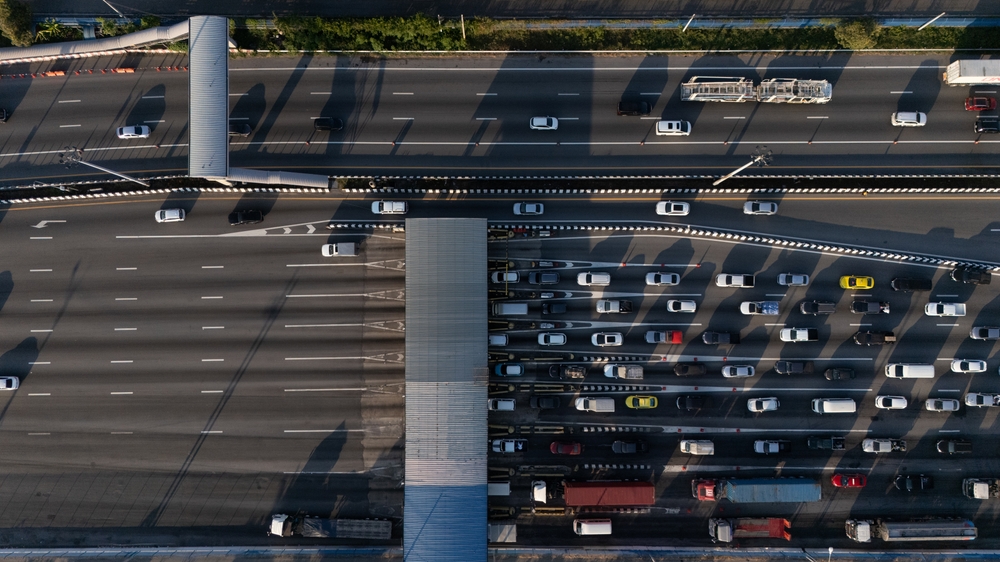
Crossing one of these bridges is about to cost drivers more than ever before.
Seven State Bridges Face the Same Toll Hikes Every Year Through 2030
The Bay Area Toll Authority locked in automatic annual increases on all seven state-owned bridges in the region.
The Bay Bridge, the Richmond-San Rafael, the Antioch, the Benicia, the Carquinez, the Dumbarton, and the San Mateo-Hayward are all on the same schedule.
Tolls rise to eight-fifty in 2026, then nine dollars in 2027, nine-fifty in 2028, ten dollars in 2029, and ten-fifty by 2030 for FasTrak users.
Drivers who do not use FasTrak pay even more.
Starting in 2027, the authority tacks on a twenty-five cent surcharge for license-plate accounts and a full dollar surcharge for drivers who get billed by mail.
Add that invoiced surcharge to the nine-dollar FasTrak toll and a single bridge crossing hits ten dollars in 2027, three years before the official ten-dollar mark even arrives.
Big rigs and anything hauling a trailer face an extra fifty cents per axle every year on top of that.
The money funds nearly two billion dollars in bridge painting, repair, and seismic work under what the authority calls its Toll Bridge Capital Improvement Plan.
Officials say the bridges need the work.
Drivers who have already watched their toll more than double since 2010, when the general toll on these bridges was five dollars, are asking why the bill keeps landing on them and only them.
A Taxpayer Group Already Sued Over This Same Toll Scheme and Lost
This is not the first time a Bay Area toll hike has ended up getting called something other than a toll.
In 2018, the Howard Jarvis Taxpayers Association sued the Bay Area Toll Authority and the state Legislature over a three-dollar bridge toll increase known as Regional Measure 3.
HJTA's Timothy Bittle argued the increase was a tax in disguise: he said virtually none of the money goes to the bridges motorists actually cross, and most of it subsidizes "public transit that motorists don't use."
Bittle called taking that much money from a blue-collar commuter to fund someone else's train ride "immoral."
A tax increase that size would have needed two-thirds approval from the Legislature or the voters.
The toll hike never got that vote.
It got approved anyway, and California's courts eventually let it stand.
Eight years later, the same authority is running the identical play with a longer runway and a bigger number attached.
Nothing from that legal fight has slowed the toll schedule down even once.
The Bay Area Toll Authority Never Has to Face a Single Voter
Here is the detail that should bother every driver stuck paying this bill: nobody on the Bay Area Toll Authority has to win an election to set these tolls.
The board is stacked with appointees from regional planning agencies, and even Gov. Gavin Newsom's transportation agency holds a non-voting seat at the table.
An appointed board wrote itself a blank check that renews automatically every January.
Do the math on what that blank check costs a regular commuter: a driver crossing one of these bridges five days a week will pay $2,730 a year once the toll hits $10.50 in 2030.
This is not the first time Bay Area Democrats were warned about tolls like this.
In August 2023, Reps. Mark DeSaulnier and Anna Eshoo warned Gov. Newsom and state legislative leaders that a separate bridge-toll bill would "disproportionately impact" low-income Bay Area residents.
State Sen. Dave Cortese asked California's state auditor to investigate the toll authority on February 13, 2025.
"People who drive the seven Bay Area state-owned bridges want answers," Cortese said, and even he could not say where years of toll money actually went.
Years of warnings later, the toll schedule has only grown bigger.
San Francisco Democrats built a transit system that cannot pay its own bills, so they turned to the one group of people who cannot fire them: the drivers who just need to get to work.
This is not just a California problem.
Gov. Kathy Hochul's MTA and the Port Authority bridges linking New Jersey to New York City run on the identical autopilot schedule, and commuters there have filed the same complaint for a decade: tolls that climb every year with no new vote and no real accountability.
The Bay Area just became the latest blue-state commuter corridor to get the same treatment, and the drivers paying ten dollars to cross a bridge in 2027 are the ones left holding the bill while Sacramento and Albany both look the other way.
Sources:
- Dave Pehling, "Bay Area Officials Approve Bridge Toll Increases Through 2030 That Will Raise Cost Over $10," CBS News San Francisco, December 18, 2024.
- ABC7 News Bay Area Digital Team, "Toll Increases: Here's How Much Most Bay Area Bridges Would Cost by 2030 Under Proposed Plan," ABC7 News, December 2024.
- Timothy A. Bittle, "Bay Area Toll Increase Is an Unfair, Illegal Tax," Howard Jarvis Taxpayers Association, 2018.
- CBS News San Francisco, "MTC/Bay Area Toll Authority: State Sen. Dave Cortese Seeks Audit of Toll Hikes," CBS News San Francisco, February 13, 2025.
- Metropolitan Transportation Commission, "Commissioners," MTC, 2026.
- CBS News New York, "Latest Toll Hikes Take Effect on Port Authority Bridges and Tunnels," CBS News New York, 2026.
- Contra Costa News, "Reps. DeSaulnier and Eshoo Express Concerns on Unfair Impact of Proposed Bridge Toll on Bay Area Residents," Contra Costa News, August 4, 2023.
- ABC7 News, "Timeline: Bay Area Bridge Toll Increases," ABC7 News, 2026.
Related posts:

 Officials Just Hit James Comey With New Case Alleging Espionage Act Crimes Right in the Nick of Time
 Calley Means Demanded Susie Wiles Preserve Every Text Before Leaving the White House
 Incoming Tennessee Lawmaker Kenny Cody Just Sent Washington Elites a Brutal Message About JD Vance