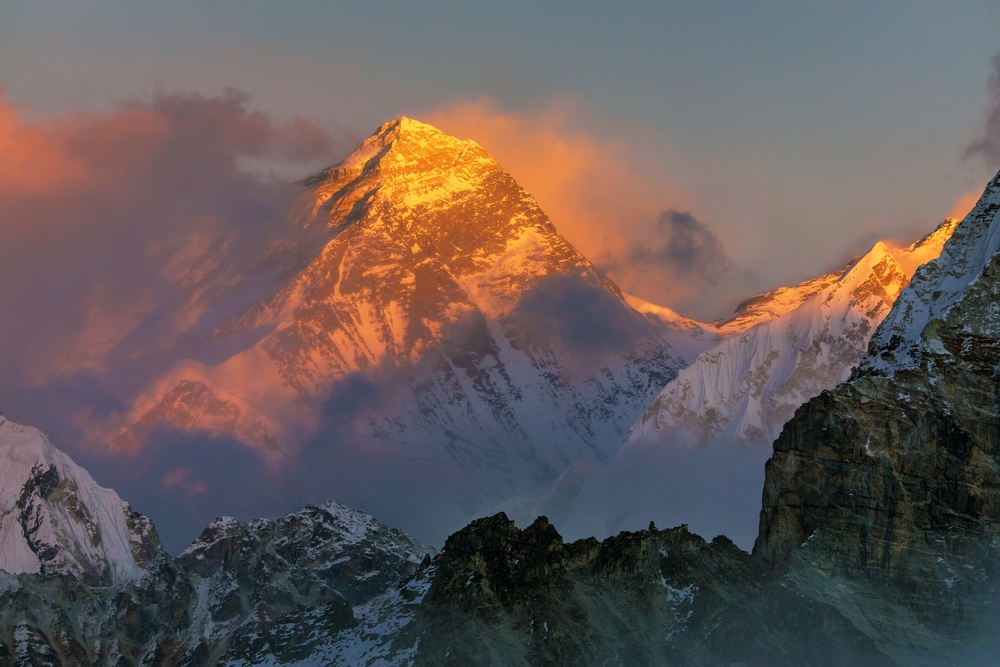
In 2019, Nepal crammed 223 climbers onto Everest in a single day and 11 people died that season.
Now Nepal just shattered that record – 274 climbers on the summit in one day – and the mountain is more crowded than it's ever been.
Nobody's talking about what comes next.
Nepal's Cash Register Stays Open While the Body Count Climbs
Nepal just confirmed 274 climbers hit Everest's summit in a single day this week – shattering the previous Nepali-side record of 223 set during the 2019 season.
That 2019 season killed eleven people.
Four of those deaths were directly blamed on overcrowding – climbers trapped in single-file queues at 27,000 feet, where standing still long enough will kill you.
Nepal has issued 494 Everest climbing permits this spring at $15,000 each.
That's $7.4 million in permit fees before a single crampon touched ice.
They are not going to stop.
The Death Zone Doesn't Care About Your Bucket List
Above 26,000 feet, your body is dying whether you paid $15,000 or $150,000 to be there.
Blood thickens.
Brain swells.
Lungs fill with fluid.
The window before those processes become irreversible is measured in hours – and it shrinks every minute you're standing in line waiting for the person ahead of you to move.
When 274 people funnel onto the same ridge on the same day, that line stops moving.
Expedition organizer Lukas Furtenbach shrugged this off by comparing Everest to a tourist peak in the Austrian Alps.
"We have mountains in the Alps like the Zugspitze where we have 4,000 persons on top per day," Furtenbach told Reuters. "So 274 is actually not a big number, considering this mountain is 10 times bigger."
The Zugspitze sits at 9,718 feet.
Everest's summit is 29,032 feet.
Nobody dies in the Zugspitze gift shop.
https://x.com/MarioNawfal/status/2057736974489071972“>https://x.com/MarioNawfal/status/2057736974489071972
Nepal Wrote the Rules and Then Ignored Them
The 2023 season killed 18 climbers – the worst death toll since the 2015 earthquake devastated base camp.
The 2024 season killed 12 more, with 900 people on the slopes simultaneously.
Nepal's government responded by drafting an Integrated Tourism Bill requiring climbers to summit a 7,000-meter Nepali peak before attempting Everest, and raising permit fees 36 percent – both billed as crowd-control measures.
Then they issued 494 permits this spring.
The reforms exist on paper.
The mountain is more crowded than ever.
Sherpas Pay the Real Price
Every one of those 274 climbers reached the summit with at least one Nepali Sherpa keeping them alive.
Sherpas fix the ropes.
Sherpas carry the oxygen.
Sherpas stay on the mountain until their client moves – no matter how long the line.
Since the first recorded death on Everest in 1922, 339 people have died on this mountain.
A disproportionate share of those deaths are Sherpa guides – men from mountain villages who stake their lives every season so that wealthy Westerners can take a photo at 29,032 feet and fly home.
Nepal's government pockets the permit money and calls 274 summits in a single day a historic achievement.
The Sherpas standing in the Death Zone waiting for the line to move know exactly what kind of achievement it is.
Sources:
- Stephen Sorace, "Record number of climbers summit Mount Everest from Nepali side despite overcrowding concerns," Fox News, May 21, 2026.
- Alan Arnette, "Everest by the Numbers: 2026 Edition," alanarnette.com, January 26, 2026.
- Alan Arnette, "Everest 2026: Everest Death, Lhotse Summit," alanarnette.com, May 12, 2026.
- "Everest season sees historic permit surge, testing Nepal's crowd-control plans," Kathmandu Post, May 8, 2026.
- "Mount Everest Climbing Crisis: Overcrowding, Deaths and Danger," Geographical, June 12, 2025.
- "Mount Everest Deaths Rise Due to Overcrowding," EBC Trek Guide, February 13, 2026.