Rand Paul walked onto the Senate floor knowing the odds were stacked against saving America.
He introduced his plan anyway.
What he handed his Senate colleagues would balance the federal government's books in five years – and now every senator has to explain why that's too much to ask.
The Number That Should Keep You Up at Night
The national debt crossed $39 trillion this month for the first time in American history.
Here's the number that puts it in perspective: Washington will spend more than $1 trillion this fiscal year just paying interest on that debt – nearly three times what it cost to carry in 2020.
That's more than we spend on national defense.
Every dollar going to pay interest is a dollar that can't fund the military, can't secure the border, can't go back in your pocket.
The debt is piling up at a pace that now puts each American's share at over $113,000 – and it grows by tens of thousands of dollars every second Congress refuses to act.
Biden added $4.7 trillion to the debt in four years.
Democrats spent money like it was on fire – COVID relief, the so-called infrastructure bill, the Green New Deal in disguise.
They called it "investment." Your grandchildren will call it theft.
The Only Man in Washington with a Plan
While Democrats blow up the credit card, Rand Paul just introduced something no other senator has: an actual budget.
His Six Penny Plan is simple enough that any taxpaying American can understand it.
Cut six cents from every dollar the federal government spends.
That's it.
Do that consistently across the entire budget – not just the small discretionary slice Congress argues over every year – and the budget balances by 2030 and starts running surpluses.
"It balances in five years," Paul told Just The News.
"But it's important to know that it has to be every bit. It's 6% of the entire budget. It doesn't work on just the discretionary budget."
Paul has been sounding this alarm since 2017.
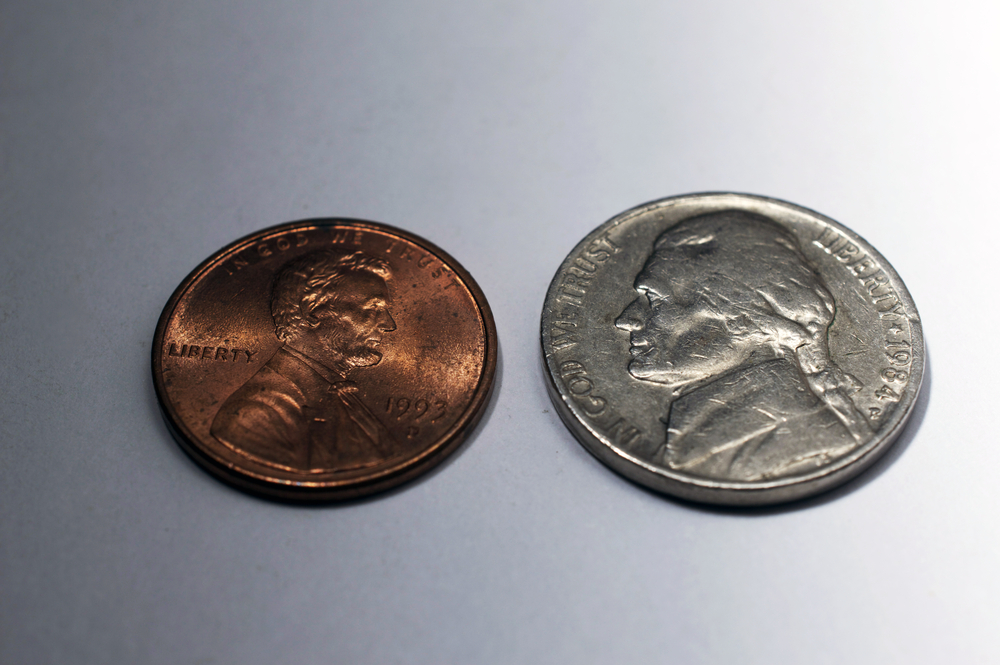
Back then, a spending freeze – not even a cut – would have balanced the budget within five years.
Congress refused.
Now the same result requires cutting six pennies out of every dollar instead of one.
The National Taxpayers Union Foundation put it plainly: if Congress had listened in 2017, the country would have a balanced budget today.
Instead, Washington kept spending – and kept adding to the bill your kids will inherit.
Washington's Addiction Has a Price Tag
The Six Penny Plan protects Social Security, preserves defense spending growth, and allows Medicare and health programs to continue expanding for an aging population.
What it cuts is the waste – the duplication, the bloated programs, the federal bureaucracy that grows regardless of results.
Paul is specific about where to start.
"I would quit paying for sugary drinks. I'd quit paying for chips, Ding Dongs, Twinkies, donuts, bags of candy," he said, describing how food stamp reform alone could generate real savings.
He also called for limiting who receives food stamps to people who actually need them – not, as he put it, "able-bodied 19, 20, 21-year-old boys or girls" who are capable of working.
That's not cruel. That's what food stamps were designed to do.
The plan also includes hard enforcement mechanisms: points of order to block spending that exceeds agreed targets, supermajority requirements for emergency spending, and scorekeeping reforms that force Congress to identify duplicative programs before creating new ones.
It locks in the pro-growth Tax Cuts and Jobs Act so Washington can't paper over the problem by raising your taxes.
This is a serious piece of legislation – and the only budget plan on the table.
Democrats haven't produced one.
The Senate as a whole has passed a budget less than half the time in the last 20 years.
Rand Paul is the only senator willing to put a number on paper and defend it.
The Vote That Exposes Everyone
When Paul forces a vote, every senator goes on record.
Every Republican who campaigns on fiscal responsibility either votes yes or explains why six pennies is too much to ask.
Every Democrat who claims to care about the next generation either votes yes or admits they'd rather spend than save.
Most of them are going to vote no.
When the last Six Penny Plan came up for a vote, 67 senators killed it – including Republicans who had spent years promising fiscal discipline the moment they got the chance.
The debt was $35 trillion then.
It's $39 trillion now.
They don't have a plan. They don't want one. And your grandchildren are going to pay every cent of the difference.
Sources:
- Amanda Head, "Rand Paul's 'Six Penny Plan' can reap big rewards with little pain on out of control spending," Just The News, March 23, 2026.
- "Dr. Rand Paul Introduces Six Penny Plan to Balance the Federal Budget in Five Years," Senator Rand Paul press release, September 16, 2025.
- "Gross National Debt Reaches $39 Trillion," Committee for a Responsible Federal Budget, March 17, 2026.
- "National Debt Tops $39 Trillion," EPIC for America, March 2026.
- "US National Debt Surges Past $39 Trillion Just Weeks Into War in Iran," Associated Press, March 19, 2026.
- Demian Brady, "Rand Paul's Six Cents Would Put the Budget on the Right Track," National Taxpayers Union Foundation.
- "Net interest payments on the national debt are projected to exceed $1 trillion in fiscal year 2026," Fortune, March 18, 2026.
Related posts:

 Jack Smith Secretly Subpoenaed Two Years of Trump Cabinet Member’s Phone Records and New Documents Show How Far it Went
 Megyn Kelly Just Stomped the Senator Who Started a War and Spent the Weekend at Disney World
 Melania Trump Did Something Thomas Massie Never Expected When She Called Out the Epstein Liars