Charlotte Bowers woke up to a bathroom full of black smoke and a company reportedly telling her the product that caused it wasn't capable of causing it.
She's lucky to be alive – and Oral B is lucky their explanation didn't come with a subpoena.
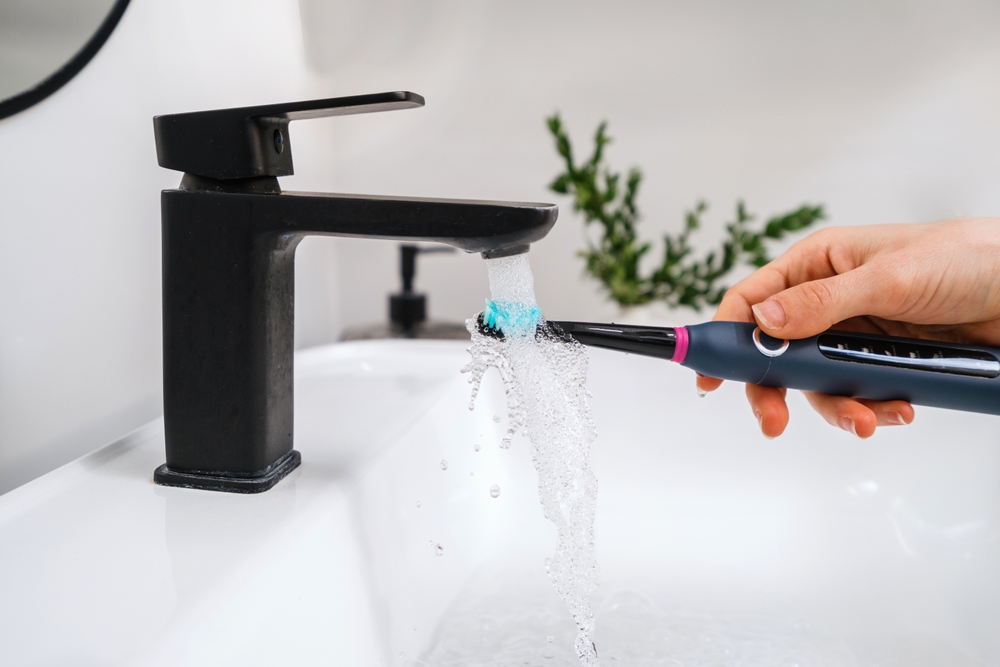
How an Oral-B CrossAction Electric Toothbrush Allegedly Caught Fire in Her Bathroom
Charlotte Bowers, 33, bought an Oral B CrossAction electric toothbrush in May 2025. She kept it dry. She didn't leave it on the charger. She did everything right.
Then one morning in February 2026, she opened her bathroom door to find it had exploded during the night and set the room on fire.
The explosion was powerful enough to trip every circuit breaker in the house while she slept. Flames climbed the wall behind the sink. The only thing that stopped her home from burning down was the steel frame of the bathroom mirror.
The extractor fan above was completely destroyed.
She and her partner had no idea how close they came to dying in their sleep.
Oral-B Denied the Electric Toothbrush Fire Was Possible and Offered $47
Here's where this story goes from frightening to infuriating.
When Charlotte reportedly contacted Oral B about the fire, the company offered her $46.69.
For a new toothbrush.
She wasn't asking for thousands. She said publicly that she just wanted them to cover the cost of repainting the bathroom — damage she put at $267.
Their official response was even more insulting than the check. An Oral B spokesperson stated the cause of the fire remained unknown, then added that an unplugged cordless toothbrush doesn't contain enough energy to cause a fire.
Read that again. The company whose product exploded in a woman's bathroom, tripped her electrical system, and destroyed her extractor fan wants you to believe it was physically impossible.
Charlotte's response was direct: "It's completely insulting. I could be dead."
Electric Toothbrush Fires and Recalls Go Back to 2004
Oral B wants you to believe this is unprecedented.
History disagrees.
In 2011, Health Canada issued a formal recall of Colgate Motion Electric Toothbrushes after nine documented explosions. Users reported batteries detonating with enough force to split the device in half. One man was brushing his teeth when it exploded in his hand. Colgate's response was to send him $20 worth of coupons.
The FDA had already issued a product warning about Oral B CrossAction Power brushes in 2004 – the same product line Charlotte was using – over brush heads coming loose and creating choking hazards during assisted brushing.
The pattern isn't complicated. Consumer reports a dangerous product failure. Company denies culpability. Consumer gets insulted with a token payout. Nobody fixes anything.
The Lithium Battery Fire Risk Inside Your Electric Toothbrush
Electric toothbrushes run on lithium-ion batteries. Those batteries have a documented failure mode called thermal runaway – a chain reaction where a compromised cell generates heat, which accelerates the reaction, until the battery ignites.
Thermal runaway doesn't require the device to be charging. It doesn't require user error. It can be triggered by a manufacturing defect, a microscopic internal short, or battery degradation over time. Eight months of normal use is well within the window where lithium-ion cells begin showing stress.
The EPA, FEMA, and independent battery researchers have spent years documenting the rising frequency of lithium-ion battery fires in household products – from e-bikes to the small consumer electronics handed out by the millions every year with no fire risk disclosure on the packaging.
Oral B told Charlotte her toothbrush couldn't have started the fire. What they couldn't explain was what else in her bathroom – stored away from water, not connected to any power supply – caused an explosion powerful enough to blow her circuits and send flames up her wall overnight.
Why the Oral-B Fire Should Make You Check Your Bathroom Tonight
Oral B CrossAction toothbrushes are one of the best-selling electric toothbrush lines on the market. They sit in bathrooms next to medicine cabinets, above toilet paper, under towels, in homes where people sleep.
Charlotte Bowers did nothing wrong. She followed every instruction. She stored the device correctly. She didn't leave it charging. She was asleep when it nearly killed her.
Corporate America has a specific playbook for moments like this: deny, minimize, and offer the cheapest settlement possible before anyone asks for documentation. Oral B hit all three. They told Charlotte it was impossible, offered her less than fifty dollars, and issued a statement that reads like it was written by someone who expects never to be questioned.
She says she will never use an electric toothbrush again. "It's not worth the risk."
She's right. And until companies like Oral B are held accountable for what their products actually do – not what their legal team says is theoretically possible – millions of people will keep putting devices with degrading lithium batteries six inches from their faces every morning.
Sources:
- "Woman 'Lucky to Be Alive' After Her Unplugged Electric Toothbrush Exploded," New York Post, March 20, 2026.
- "Colgate-Palmolive Recalls 'Exploding' Electric Toothbrushes," Global News, November 3, 2011.
- "Electric Toothbrushes: FDA Releases Product Warning," Wurzbach Parkway Family Dental, 2012.
- "Battery Fire Safety," U.S. Fire Administration (FEMA), accessed March 2026.
- "In Cleanup From California Fires, Lithium-Ion Batteries Are a Dangerous Challenge," NBC News, January 27, 2025.
Related posts:

 JD Vance Announces a New Book and the Left Already Hates What It’s About
 Trump’s FCC Just Forced a Giant Cable Company to Bring Jobs Back to America
 Trump Cut Off the One Thing Keeping California and New York Democrat Parties Alive