History buffs are going to love this discovery.
Italian archaeologists just pulled something extraordinary from the Mediterranean Sea.
And Italian divers found one Roman helmet that tells the story of Rome’s greatest victory.
Divers discover ‘extraordinary’ Roman military treasure
Last month, divers from the Society for the Documentation of Submerged Sites working off Sicily’s Aegates Islands made the kind of discovery that gives archaeologists goosebumps.
They hauled up a bronze helmet from the seafloor that’s been sitting there for over 2,200 years.
This isn’t just any old piece of metal, either.
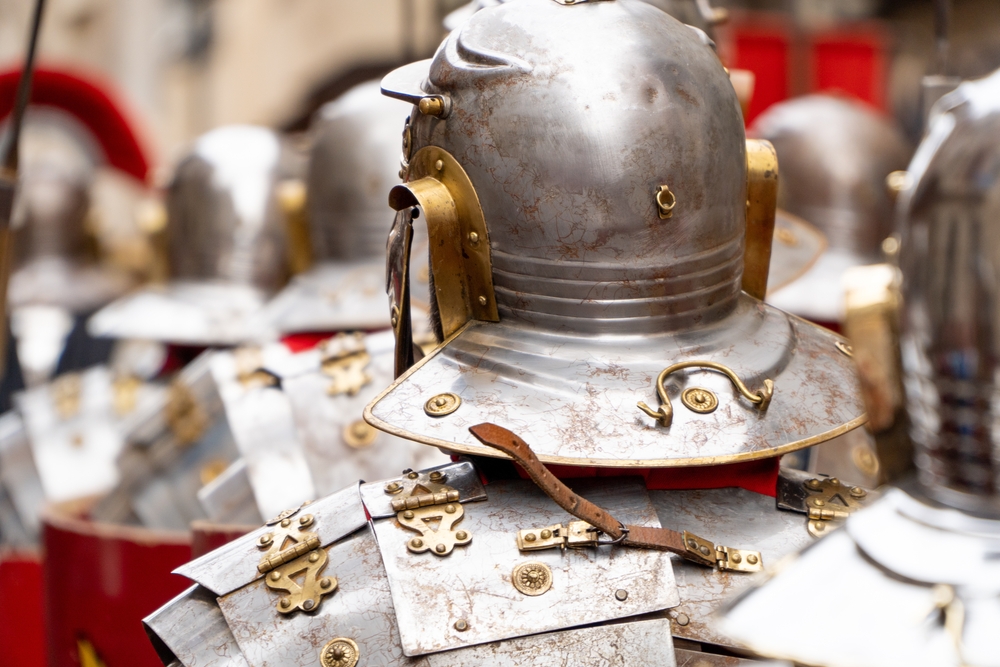
The helmet is what experts call a "Montefortino" type – complete with cheek guards and in what officials are calling "extraordinary condition."
Francesco Paolo Scarpinato, Sicily’s Councilor for Cultural Heritage and Sicilian Identity, called it "one of the most beautiful and complete ever recovered."
The timing of this find couldn’t be more perfect.
These waters off the Aegates Islands were the scene of one of the most decisive naval battles in ancient history.
The helmet witnessed Rome’s rise to Mediterranean dominance
Here’s where this discovery gets really exciting.
That helmet was worn by a warrior who fought in the Battle of the Aegates in 241 B.C.
This was the battle that effectively ended the First Punic War between Rome and Carthage.
Think about what that means for a second.
This piece of bronze witnessed the moment when Rome became the dominant power in the Mediterranean almost 2,300 years ago.
The divers didn’t stop with just the helmet, either.
They found 30 other heavily encrusted artifacts that turned out to be weapons – swords, lances, and javelins.
After CT scans revealed what was under all that marine growth, archaeologists realized they were looking at the actual weapons used in that historic battle.
They even found a bronze ram – the kind Romans used to crush enemy ships – with Latin inscriptions mentioning Gaius Sulpicius, who was a consul during the First Punic War.
What this discovery means for understanding ancient warfare
Look, this is the kind of find that rewrites history books.
We’re not talking about pottery shards or coins here – we’re talking about the actual gear that Roman warriors carried into one of the most important battles in Western civilization.
The Battle of the Aegates didn’t just end a war.
It set Rome on the path to becoming the empire that would shape the entire Western world.
Every piece of military equipment they’re pulling up from that seafloor tells us something new about how Romans fought, how they equipped their soldiers, and how they built the military machine that conquered the known world.
Scarpinato put it perfectly: "These discoveries not only enrich historical knowledge of the 241 B.C. battle, but also strengthen the image of our island as the guardian of a cultural heritage unique in the world."
Italy keeps pulling these incredible discoveries out of the ground – and now out of the sea.
Just this year, they’ve found 2,300-year-old tombs in Puglia and ancient "fairy houses" in Sardinia.
But this helmet discovery hits different.
This is military history you can hold in your hands.
This is the equipment that built an empire that lasted over 1,000 years and gave us the legal and cultural foundations of Western civilization.
The Roman legions that carried gear just like this went on to conquer Gaul, Britain, and half the known world.
They built roads that we still use today and established legal principles that form the backbone of our justice system.
And now, thanks to some dedicated Italian divers, we get to see exactly what those warriors looked like when they sailed into battle almost two millennia ago.
https://twitter.com/archaeologymag/status/1965838945855431027
¹ Regional Government of Sicily, "Bronze Helmet from First Punic War Discovered off Aegates Islands," September 5, 2025.
² Andrea Margolis, "Divers uncover ‘extraordinary’ military treasure tied to legendary Roman battle," Fox News, September 18, 2025.