
Turkey has been dropping bombshells about ancient civilizations for decades.
But even veteran archaeologists weren't ready for this latest find.
And archaeologists made one discovery that just rewrote sixteen hundred years of history and it’s going to thrill Kamala Harris.
Industrial-scale wine production discovered near ancient fortress
Archaeologists working near the village of Oymakli in southeastern Turkey just uncovered something that changes how we understand ancient commerce.
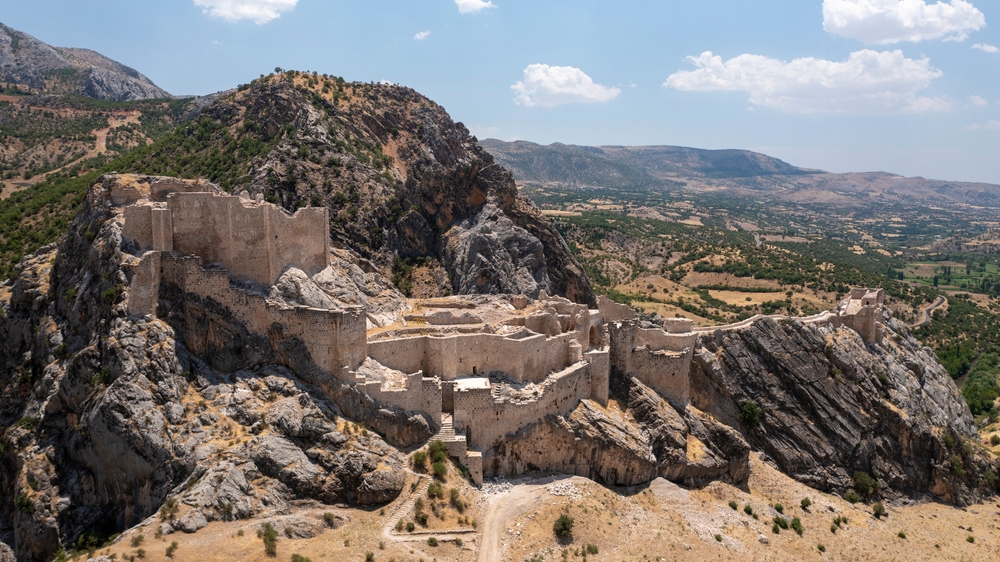
A massive wine production center dating back 1,600 years was hidden beneath the soil near the imposing Kahta Castle.
The 37-acre Roman-era settlement isn't just another archaeological site.
Provincial Museum Director Mehmet Alkan told Turkish media that the scale of grape-processing installations suggests this was an industrial operation, not some small family vineyard.¹
That makes total sense if you think one of the reasons for the Roman empire’s downfall may have been it had an extremely healthy share of wine-guzzling political leaders.
Not surprisingly, this massive Turkish wine production center dates to just a few decades before the fall of the Western Roman Empire in 476 AD.
In that light, America may still have a few days ahead of us after voters rejected Kamala Harris’ bid to seize the White House last November.
"The building's foundations survived remarkably well, despite being built with irregular stones," Alkan explained.²
What makes this discovery extraordinary is the sheer scope of what they found.
The archaeologists uncovered multiple grape-crushing installations, sophisticated water cistern systems, and grinding stones all designed for mass wine production.
The timing of this discovery puts it right at the crossroads of history when Christianity was spreading across Turkey and Constantinople was emerging as the new center of power.
But here's what the experts aren't telling you about the bigger picture.
This discovery exposes the real story of ancient Turkish wine dominance
Turkey's wine history makes France look like a newcomer.
Archaeological evidence shows wine production in this region dates back over 7,000 years, with the Hittites creating some of the world's first documented wine laws around 4,000 BCE.³
The Kingdom of Commagene, which built Kahta Castle in the 2nd century BC, understood something modern politicians have forgotten.
Wine wasn't just about getting people drunk.
It was economic power, religious significance, and diplomatic currency all rolled into one.
The Commagene rulers, who claimed ancestry from both Alexander the Great and Persian kings, used wine production as a foundation of their wealth and influence.
Look, they built Kahta Castle to keep enemies out. But it turns out they were also running a massive wine operation right under everyone's noses.
That castle wasn't just about defense. It was the historical equivalent of today’s military industrial complex, protecting the corporate oligarchs’ headquarters for what had to be the ancient world's version of a booze empire.
https://twitter.com/histories_arch/status/1968374666646659133
Here's what nobody's talking about with Turkey's archaeology boom
This wine factory isn't some isolated discovery. Turkey's been dropping archaeological bombshells all year that completely embarrass what we learned in college history classes.
Just in 2025, archaeologists found a 5th-century necropolis in Cappadocia, structures that might be older than Göbekli Tepe, and evidence of advanced communities that makes everything we thought we knew about early civilization look ridiculous.⁴
Here's the thing Western academics don't want to admit: Turkey's sitting on treasures that make most European sites look like amateur hour. But for centuries, they kept their focus on Greece and Rome because that's what fit their narrative.
While tour groups flock to the Colosseum, sites like this wine production center remained buried and forgotten.
The Hittites were crafting bronze helmets and building temple complexes when most of Europe was still figuring out agriculture.
The Kingdom of Commagene was creating monumental sculpture and sophisticated trade networks while northern European tribes were living in mud huts.
But you won't hear that perspective in most history textbooks.
The Turkish Ministry of Culture and Tourism is now working to register this wine production site as a protected archaeological area, ensuring it gets the recognition it deserves.
What archaeologists found near Kahta Castle isn't just an ancient winery.
It's proof that advanced commercial civilization was thriving in Turkey 1,600 years ago on a scale that puts modern operations to shame.
Get this: these people weren't sitting around making wine in clay pots for their buddies.
They had full-scale industrial operations with engineering that would impress you today. Water management systems, production lines that could supply entire regions. This was serious business.
What archaeologists found near Kahta Castle forces a simple question: how many other operations like this are still buried?
Because if they were running wine empires 1,600 years ago with this level of sophistication, what else don't we know about these civilizations?
The experts are going to have to rewrite their textbooks. Again.
¹ Mehmet Alkan, quoted in "Archaeologists unearth another ancient Roman settlement in southeastern Türkiye," Anadolu Agency, October 16, 2025.
² Ibid.
³ "The History of Turkish Wine: Ancient Origins to Modern Revival," 502vineyards, February 1, 2025.
⁴ "September 2025 in Turkish archaeology," Turkish Archaeological News, September 2025.