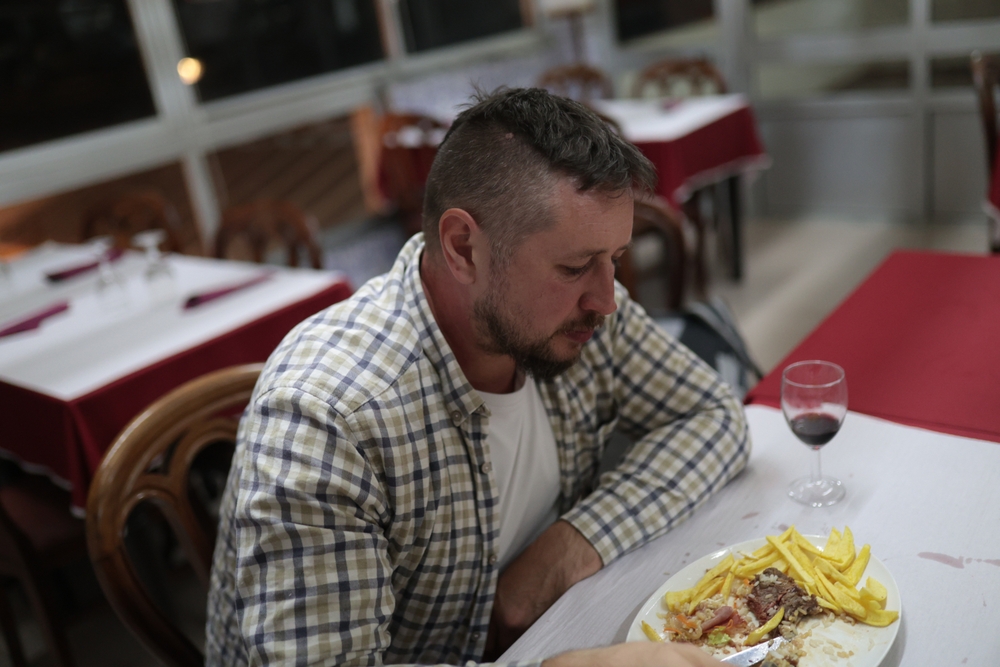
Dining alone used to mean hiding behind a book in the back corner of a restaurant.
Restaurant data now shows solo tables becoming one of the industry's fastest-growing customer groups.
Now those same diners are asking for smaller portions, and the request is dividing restaurants nationwide.
Eating Alone in Restaurants Used to Carry a Social Stigma
Penn State lodging management professor Anna Mattila studies solo dining, and she says the old stigma is gone.
"The social norms have changed," Mattila said.
"People don't look at solo diners anymore and think, 'You must be a loner.'"
That shift did not happen by accident.
OpenTable CEO Debby Soo points to a broader cultural change in how Americans treat their own company.
Soo credits "a broader movement of self-love and self-care" for the shift, not isolation.
She also points to remote workers looking for a reason to leave the house and eat somewhere other than a home office.
JourneyWoman CEO Carolyn Ray says the culture is simply catching up to something that was already true – plenty of people are on their own because they chose to be.
She calls modern solo diners "independent and empowered," not isolated.
Census data backs up the demographic shift behind that confidence.
Pew Research found 38% of U.S. adults ages 25 to 54 lived without a partner as of 2019, up from 29% in 1990.
More adults are simply choosing to spend more of their lives on their own terms – and that includes dinner.
The United States is not alone in this shift, either.
Japan's Hot Pepper Gourmet Eating Out Research Institute found 23% of Japanese diners now eat out alone, up from 18% in 2018.
Restaurants there have a name for the solo diner's seat: "ohitorisama," a term that treats eating alone as its own respected category of customer, not an awkward exception.
Toast Data Shows Solo Reservations Climbing Across the Country
The numbers back up what Mattila, Soo and Ray are describing.
Toast, a restaurant technology company, measured a 22% year-over-year jump in solo reservations through the third quarter of 2025.
Fast-food chains are seeing an even bigger shift.
Yum Brands – the parent company of Taco Bell, KFC and Pizza Hut – reported solo dining orders are up 52% since 2021.
Solo orders have climbed to 47% of all quick-service visits, compared with just 31% four years earlier.
Yum Brands chief marketing officer Ken Muench says the appeal has nothing to do with loneliness.
"In an unpredictable world, consumers are looking for small moments of control," Muench said.
"Food has become one of the easiest places to get that back."
NewYork-Presbyterian psychiatrist Gail Saltz agrees solo meals are filling a real need, independent of anyone else's schedule.
She says dining remains one of life's great pleasures, and even a solo meal can offer real relief from stress.
Why Asking for a Smaller Portion Became a Flashpoint
None of that explains why a half-size portion request is suddenly controversial.
Food outlets report solo diners increasingly asking servers to size down a dish so they can sample more of the menu in one sitting.
Online reaction split almost immediately, though the pushback says more about the restaurants than the diners.
One widely shared comment told solo diners bluntly, "Don't even bother, order the regular meal."
That take treats a paying customer's request like an imposition, not a reasonable ask from someone who already chose to sit down alone and pay full price.
The real sticking point is the kitchen, not the diner.
A pasta dish can be portioned apart easily, since the noodles, sauce and garnish scale down cleanly.
A plated steak, a whole fish or a pre-portioned dessert cannot be cut in half without changing the dish entirely.
Restaurants still spend roughly the same prep time on a half order as a full one, which is exactly why some kitchens balk at charging half price for it.
Some kitchens have already found a workaround, scaling a shareable appetizer into a solo entrée instead of cutting a full plate in half.
One London restaurant, Alex Dilling, has gone even further and started charging solo diners the same tasting-menu price as a table of two, treating a party of one as a full reservation rather than a problem to manage.
Those are the restaurants getting it right.
The ones still saying no are not protecting their kitchens – they are turning away a customer base that just grew 22% in a single year.
The diners driving this trend are not apologizing for asking.
They are adults who decided eating out alone is not a consolation prize, and they are not interested in being talked out of ordering exactly what they want.
Whether restaurants adjust their menus or hold the line, the diners forcing that conversation are not going anywhere.
Sources:
- Sadie Chafe, "Solo Diners Are Asking Restaurants for Half-Size Portions, Sparking Debate Over Menu Flexibility," Fox News, November 22, 2026.
- Dee-Ann Durbin and Anne D'Innocenzio, "Growing Restaurant Trend Is the Product of New Social Norms, Expert Says," The Associated Press, September 8, 2024.
- Deirdre Bardolf, "Solo Dining Surges 52% as Americans Embrace 'Me-Me-Me Economy' Over Shared Meals," Fox News, February 26, 2026.
Related posts:

 Obama’s Cheesecake Joke Exposed What His Presidency Cost Everyone and Then His Follow Up Really Dropped Jaws
 The CBO Just Confirmed Deficits Will Explode Even in a Booming Economy
 Republicans Just Found a Reconciliation Loophole That Locks Democrats Out for Years