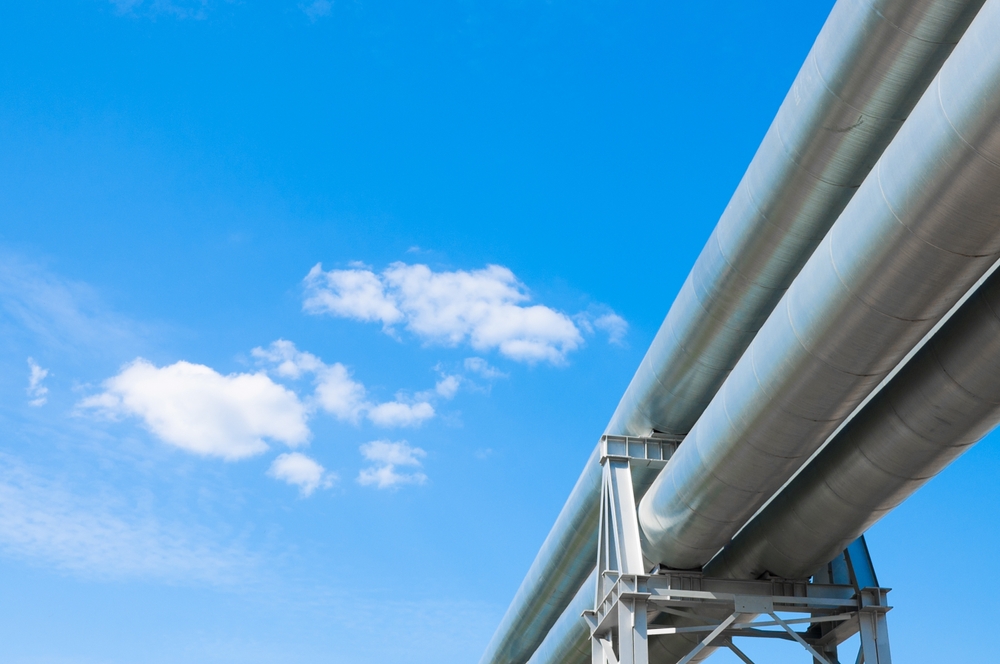
Trump's team is racing to approve pipelines, mines, and energy projects across the country.
One buried clause in a 1972 law means a future Democrat president could kill every single one of them without touching Congress.
The industry group now begging the White House to close this loophole says time is running out.
How Section 404(c) Lets the EPA Erase a Permit After It's Issued
Section 404(c) of the Clean Water Act gives the EPA the power to block or reverse where companies dump dredged or fill material for construction projects.
Here's the part almost nobody knows: the law sets no time limit on when the EPA can use that power.
That means the EPA can strike down a permit before it's ever issued, while it's under review, or years after a company has already broken ground and spent hundreds of millions of dollars building.
Myron Ebell, senior advisor to the Fix the EPA Veto Coalition, laid out exactly why this should terrify anyone who cares about American energy independence.
Any project that becomes "controversial and political," Ebell said, carries "the threat of a veto" hanging over it.
Ebell headed the EPA transition team during Trump's first administration, and he's watching the same threat resurface now with even higher stakes.
Obama's EPA Already Used This Weapon On the Mingo Logan Coal Mine
This isn't a hypothetical scare story.
In 2011, the EPA used Section 404(c) to block valley fill disposal sites for Mingo Logan Coal Company's Spruce No. 1 mine in West Virginia.
The catch: the Army Corps of Engineers had already issued that permit four years earlier.
Mingo Logan had already begun a $250 million investment that would have created roughly 250 good-paying jobs before Obama's EPA pulled the rug out from under the company.
The D.C. Circuit Court of Appeals sided with the EPA, and the Supreme Court refused to even hear the case.
Then Obama's EPA did it again in 2014, this time preemptively killing the massive Pebble Mine project in Alaska before the company had even filed a formal permit application.
Pebble Mine sat on one of the largest undeveloped copper deposits on Earth, and one administration's political mood was enough to bury it before it started.
Trump's Permitting Reform Means Nothing If the Veto Stays in Place
Here's the trap Trump's team is walking into right now.
The president has staked much of his second term on cutting the red tape that slows down American energy projects.
But Daren Bakst, director of the Competitive Enterprise Institute's Center for Energy and Environment, says all that speed means nothing if the next hostile administration can simply veto everything after the fact.
Relying on a permit that could vanish later, Bakst warns, is "a serious problem" for the entire industry.
Jason Hayes, a senior research fellow at The Heritage Foundation, agrees the current authority has spiraled far beyond what Congress ever intended.
The authority Congress gave the agency, Hayes said, is simply "too broad."
The U.S. Chamber of Commerce is sounding the same alarm, warning that unchecked veto power "undermines confidence in the permitting system" for every company that plays by the rules.
The PERMIT Act Passed the House and Stalled in the Senate
The House already passed a solution months ago.
The PERMIT Act would restrict EPA's veto authority to a single narrow window: after a complete application is submitted, but before the permit is actually issued.
That single change would end both retroactive vetoes like Mingo Logan and preemptive vetoes like Pebble Mine forever.
The bill has been sitting in the Senate Environment and Public Works Committee since December, going nowhere.
Bakst has argued the administration doesn't have to wait on Congress to start protecting its own projects, and that a Trump executive order on the issue would signal to lawmakers how seriously the White House takes the threat.
An executive order wouldn't be permanent since a future administration could reverse it, but even a temporary rule takes time to unwind, buying critical protection in the meantime.
Every Pipeline Permit Trump Approves Today Has a Target On Its Back
Think about what this actually means for the pipelines, mines, and energy terminals getting approved across the country right now.
Not one of them is safe from a future administration's political whims, no matter how thoroughly they comply with the law today.
The Army Corps issues between 60,000 and 75,000 of these permits every year, supporting roughly $200 billion in economic activity nationwide.
That's $200 billion in projects standing on a legal foundation the EPA can pull out from under them whenever politically convenient.
Fix the EPA Veto Coalition wants the administration to act now while Republicans hold the White House, because this window to fix the loophole permanently won't stay open forever.
If Trump's team wants his energy legacy to actually survive past his presidency, closing this loophole may be more important than any single pipeline he approves.
Sources:
- Elaine Mallon, "Trump-approved energy projects at risk of sudden death by next hostile president," Fox News, August 13, 2026.
- Jason Hayes, senior research fellow for energy, climate and environment, The Heritage Foundation, Heritage.org, August 2026.
- U.S. Senator Shelley Moore Capito, "Senate Bill Would Restrict EPA Veto Power," Capito.Senate.gov, official press statement.
- National Mining Association, "Supreme Court Declining to Review EPA's Retroactive Ruling on Mingo Logan Mine Creates Regulatory Uncertainty for U.S. Companies, Harms Investments and Jobs," NMA.org, 2019.
Related posts:

 A Supreme Court Ruling Just Blew Up California’s Case Against a Top Trump Election Lawyer
 Rand Paul Bypassed the Full Senate and Hand Delivered Fauci’s Case to Jeanine Pirro
 Seventeen State Treasurers Just Informed the SEC Exactly How Much Damage Biden’s ESG Rule Did