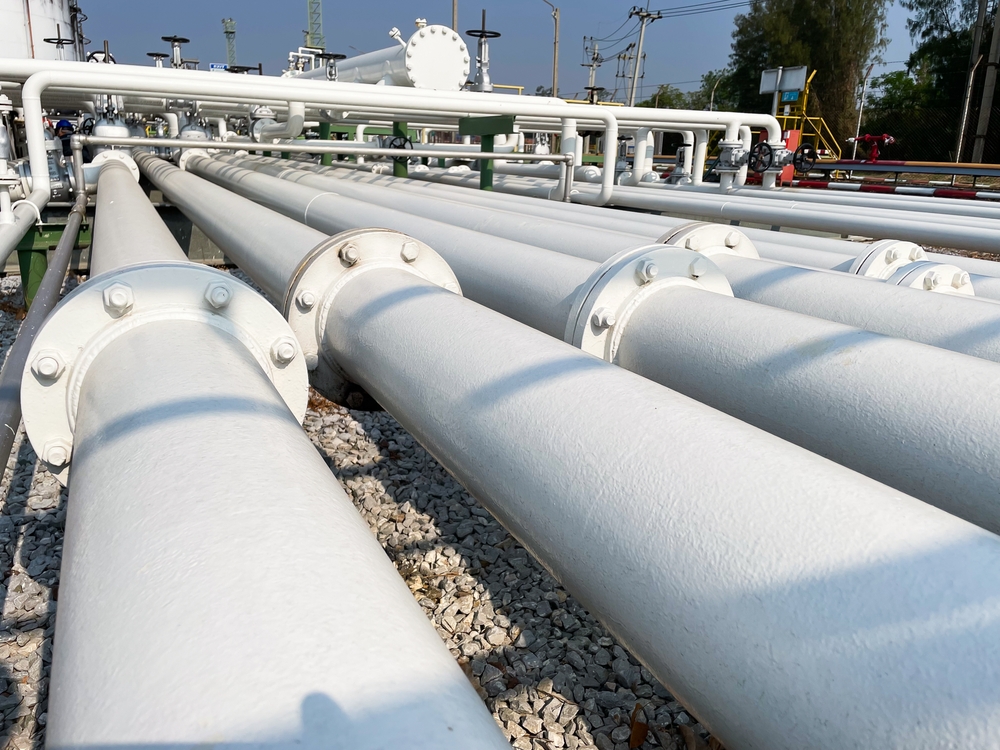
Years of environmental lawsuits delayed the Keystone XL pipeline until a new president killed it for good.
President Trump's energy agenda just forced a bipartisan Senate bill stripping away that legal weapon.
Even the senator who defended that weapon for years is now taking credit for giving it up.
The Bill Slashes Years Off Federal Energy Lawsuits
The Republican-led Senate voted 73 to 25 on Monday to advance the Bipartisan American Affordability and Jobs Act.
Lawmakers returned from a month-long recess for the midterm elections and went straight to work on it.
Congress already knows how badly this kind of reform is needed, because lawmakers had to step around the normal process once before to get a single pipeline built.
In 2023, Congress attached special legislative language to a debt-ceiling deal just to force approval of the Mountain Valley Pipeline, after years of lawsuits had stalled a project that was otherwise fully permitted.
That workaround should never have been necessary.
For years, groups opposed to pipelines, power plants, and export terminals did not need to win an argument on the merits.
They only needed a sympathetic judge and endless time.
A project could clear every federal review and still die in court years later, bled out by appeal after appeal.
This bill puts a clock on that strategy.
It sets enforceable deadlines for key federal reviews, with judges empowered to force agencies that blow past them.
It gives challengers just 150 days to file certain legal claims instead of years.
It requires anyone suing to prove they were actually harmed, not just philosophically opposed.
It narrows Clean Water Act Section 401 reviews to actual water-quality questions instead of a backdoor veto over an entire project.
It curbs the ability of blue states and the Obama-Biden EPA playbook of slow-walking approvals to kill projects Washington already approved.
American Petroleum Institute President Mike Sommers called it a "generational opportunity" to fix a permitting system that has choked off investment for decades.
He is not exaggerating the stakes.
More than 650 major infrastructure projects, worth an estimated 1.1 to 1.5 trillion dollars, are sitting in federal limbo waiting on approvals right now.
An API-commissioned ICF study found that full reform could cut residential electricity bills by a combined 55.6 billion dollars between now and 2035, support 705,000 jobs, and generate nearly 24 billion dollars in tax revenue by 2030.
McKinsey found permitting delays alone can inflate construction costs by 24 to 30 percent before a single shovel hits dirt.
Senators Shelley Moore Capito and Mike Lee helped forge the deal on the Republican side, turning the president's demand for faster permits into actual legislative text.
Whitehouse Calls the Same Bill a Climate Triumph
Rhode Island Democrat Sheldon Whitehouse built his Senate career defending the environmental lawsuit machine this bill just defanged.
Now he is the bill's loudest Democrat cheerleader.
Whitehouse claimed the legislation would save American families 60 to 80 dollars a month, prevent 1.5 to 1.8 gigatons of greenhouse gas emissions, and boost wind capacity by 25 percent, solar by 28 percent, and battery storage by 70 percent.
He went further, calling it "a climate and clean energy bill" and predicting it would become the "biggest implemented climate bill" once signed into law.
Democratic Senator Martin Heinrich also backed the deal, which is less surprising once you remember he represents New Mexico, home to some of the busiest oil and gas fields in the country.
Notice what is missing from Whitehouse's victory lap.
He did not mention the 150-day litigation deadline.
He did not mention the narrowed Clean Water Act reviews.
He did not mention that the same enforceable timelines speeding up a wind farm speed up a natural gas pipeline just as fast.
What a Trillion Dollars in Stalled Projects Means for Your Bill
Republicans built a bill engineered to unleash every form of American energy at once, and a progressive stalwart just stood up and claimed credit for it.
That is not an accident, and it is not really about climate.
It is an admission that the lawsuit-everything strategy Whitehouse and his allies ran for two decades was never primarily about protecting a river or a wetland.
It was about using the courts to override voters and kill projects Washington had already approved, one delay motion at a time.
The political pressure of Trump's energy agenda, not a sudden change of heart, is what made it too costly for Senate Democrats facing the midterms to keep blocking a bill their own states' manufacturers, utilities, and labor unions wanted built.
Whitehouse chose to climb aboard and rebrand a deregulation bill as a climate victory rather than get run over by it.
Families paying power bills inflated by a decade of permitting delays will not care which party takes the victory lap.
They will care that pipelines, transmission lines, and power plants that have been stuck in court since the Obama administration can finally break ground.
Sources:
- Timothy Gardner and Nichola Groom, "US Senators Hit Deal on Energy Project Permitting Bill, Vote After Midterm Elections," Reuters, October 1, 2026.
- American Petroleum Institute, "Permitting Reform Is Within Reach," American Petroleum Institute, October 5, 2026.
- Akin Gump, "Senate Unveils Bipartisan Comprehensive Permitting Reform Bill," Akin Gump, October 2026.
- Davis Wright Tremaine, "Permitting Reform Gets Real: What the Senate's Bipartisan Energy Bill Means for Your Next Project," Davis Wright Tremaine, October 2026.
- John Solomon, "Senate Advances Bipartisan Permitting Reform Bill in Return From Midterms Recess," Just the News, November 9, 2026.
Related posts:

 Nicki Minaj Took Trump’s Michigan Stage and Said the One Thing About Kids Democrats Dread
 Hillary Clinton Declared a New Era for Trump and Kamala Harris Revealed What Comes Next
 Donald Trump Jr Stacked Russell Brand Against Grooming Gang Sentences and Britain Has No Answer